
Uranium (U-238) Found in Breast Milk in Bihar
☕ India’s Morning Briefing: Tue, November 25


Hello, and welcome to the brief.
Good morning, friends.
The US ghosted the G20 party in South Africa, Brazil decided saving the planet involves writing checks rather than quitting oil, and India’s women proved you don’t need sight to have a vision. Let’s dive in.
Welcome to the 165th edition of The India Brief
Do not miss the deep dive in the end.
Greeting: Good morning, night owls and early birds; yesterday, Bollywood lost its He-Man, the Supreme Court got a new captain, and Canada finally decided to talk business again—proving that in India, every ending is just a dramatic prelude to a new beginning.
The Top 20: India Unpacked
🎬 End of an Era: Dharmendra Ji passes away at 89

Veteran actor Dharmendra passed away at 89 in Mumbai following a prolonged illness involving breathing complications.
Final rites performed at Pawan Hans Crematorium, Vile Parle; attended by industry stalwarts including Amitabh Bachchan, Shah Rukh Khan, Salman Khan, Aamir Khan, and Hema Malini.
No state funeral was accorded; reports suggest the family opted for a private farewell.
Dharmendra Kewal Krishan Deol, known simply as Dharmendra, was more than just a film star; he was a cultural phenomenon who bridged the gap between the rustic, agrarian masculinity of Punjab and the polished glamour of Bombay cinema.🔗
⚖️ Justice Surya Kant Takes the Helm
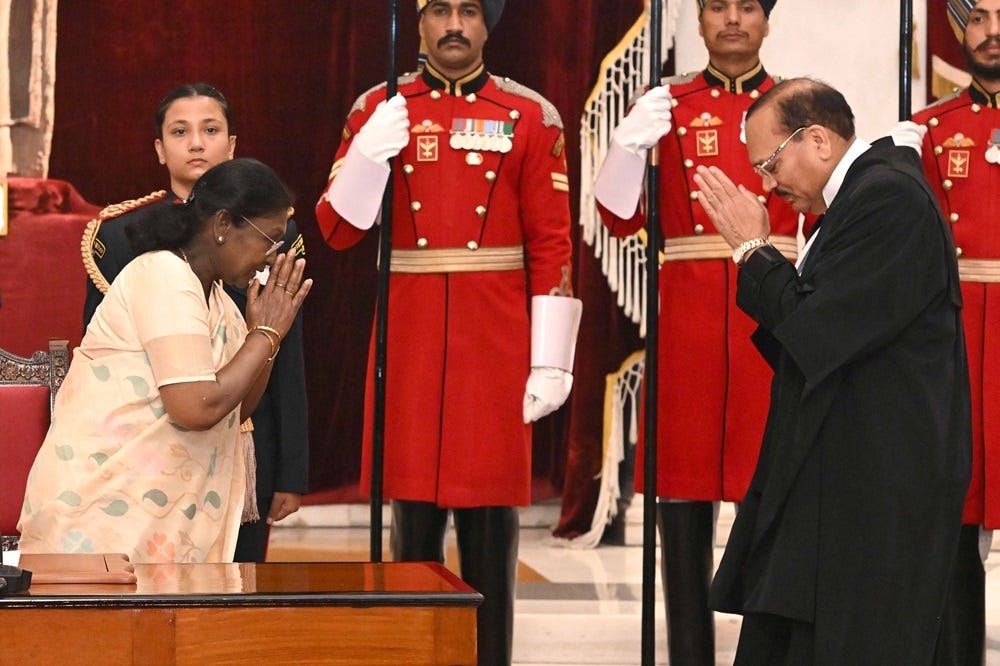
Justice Surya Kant sworn in as the 53rd Chief Justice of India by President Droupadi Murmu at Rashtrapati Bhavan.
Succeeds Justice B.R. Gavai; tenure will last approximately 15 months, ending in February 2027.🔗
🕍 Punjab’s ‘Holy City’ Resolution
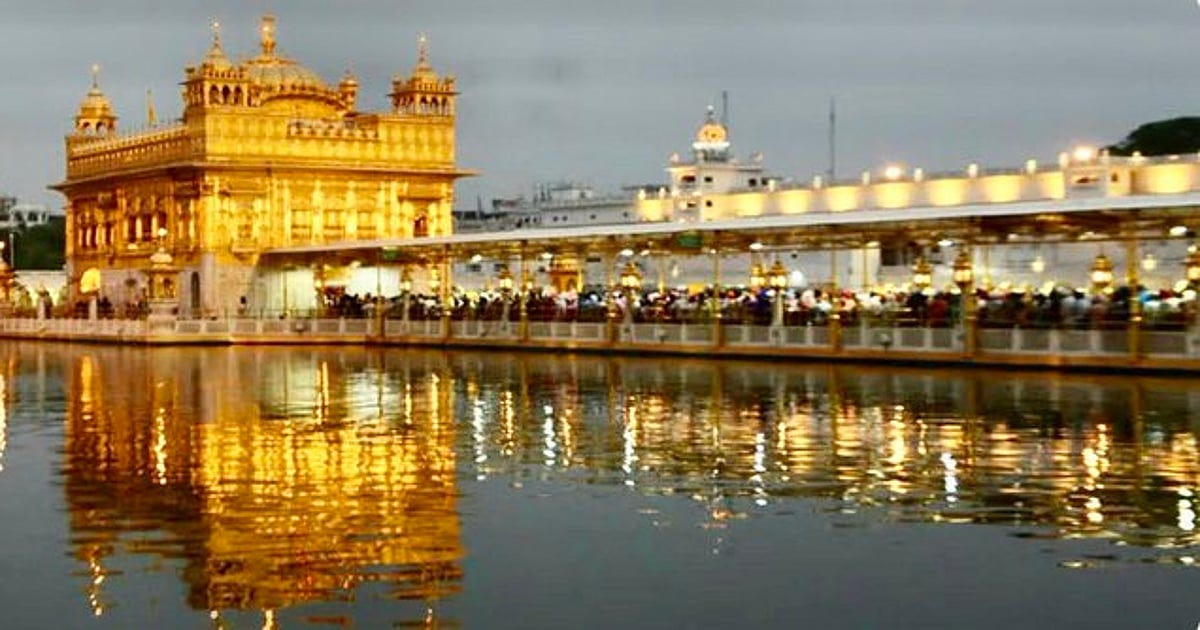
Punjab Vidhan Sabha passed a unanimous resolution declaring Anandpur Sahib, Talwandi Sabo, and the Golden Temple environs (Amritsar) as ‘Holy Cities’.
Resolution moved by CM Bhagwant Mann during a special session at Anandpur Sahib to mark the 350th Martyrdom Day of Guru Tegh Bahadur;.
Status entails a complete ban on sale and consumption of liquor, meat, and tobacco items in these areas;.
This was the first-ever assembly session held outside Chandigarh, at the Bhai Jaita Ji Memorial Park;.
In Punjab’s volatile political arena, “Panthic” (religious) votes are the kingmaker. AAP, often criticized as an “outsider” party (Delhi-centric), is using this resolution to embed itself deeply into the Sikh psyche. By physically moving the legislature to a religious site and passing a unanimous resolution, they force the opposition (Akali Dal/Congress) to support them or risk appearing anti-faith. It’s a strategic co-option of religious symbolism to stabilize a secular government’s legitimacy in a religiously sensitive border state.🔗
🚩 Ayodhya Ready for the Flag
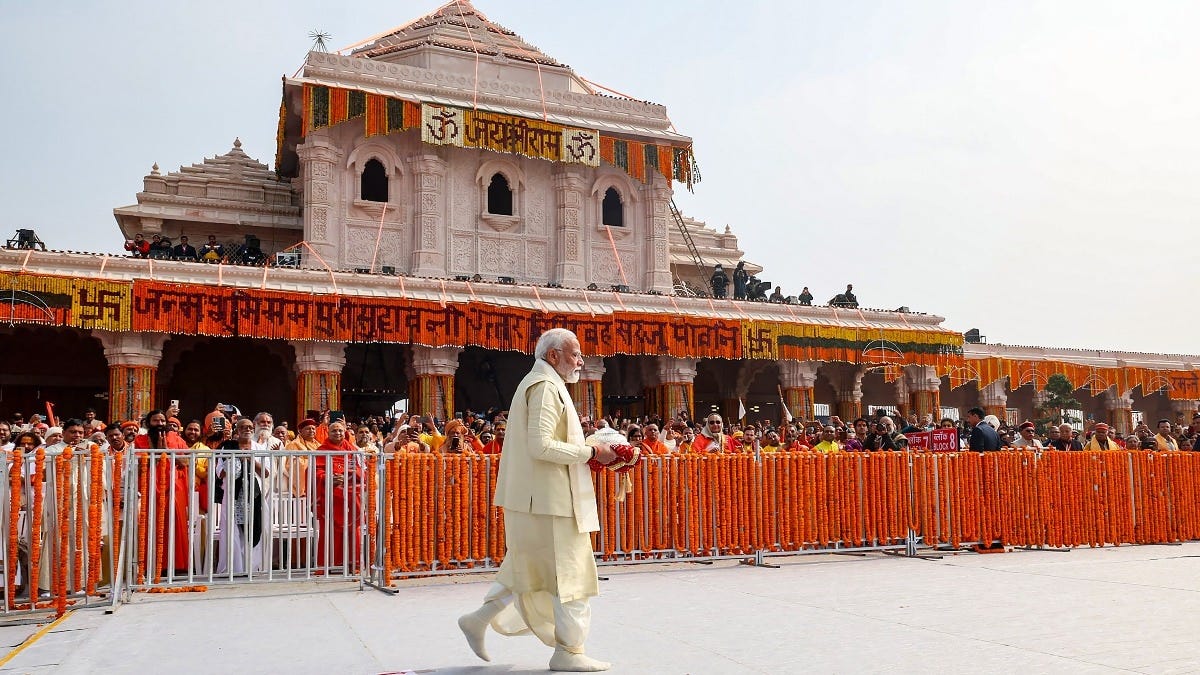
PM Narendra Modi to visit Ayodhya on Nov 25 for Dhwaja Rohan (flag hoisting) at the Ram Temple;.
Ceremony marks the completion of temple construction; coincides with Vivah Panchami (wedding anniversary of Lord Ram and Sita);.
PM will hoist a 10-foot high, 20-foot long saffron flag;.
Temple entry/darshan schedules revised; heightened security;.🔗
☢️ The Silent Poison: Uranium in Bihar

Study found elevated Uranium (U-238) levels in breast milk of lactating mothers in several Bihar districts;.
70% of infants at risk of non-carcinogenic health effects;.
Worst affected districts: Katihar, Khagaria, Samastipur; source linked to contaminated groundwater and food chain;.
Experts emphasize breastfeeding should continue as benefits outweigh risks, but call for urgent biomonitoring;.
Groundwater contamination in the Gangetic plains has long been a crisis (usually arsenic), but Uranium is a terrifying new entrant. The study, published in Scientific Reports, reveals that geogenic factors (uranium-rich rocks) combined with excessive groundwater extraction (for agriculture) are leaching the metal into the water table. Read the deep dive for more information.🔗
💊 Delhi’s Meth Mountain
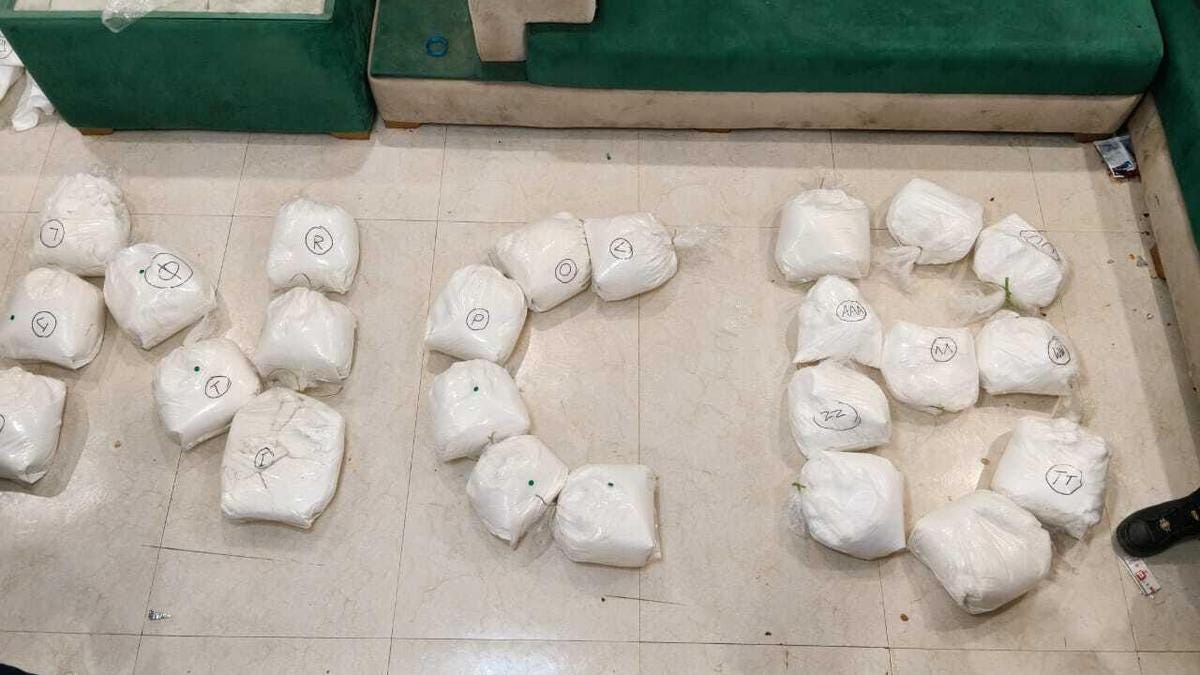
NCB and Delhi Police seized 328 kg of methamphetamine worth ₹262 crore in Delhi;.
Dismantled a major cartel; one of the largest synthetic drug hauls in the capital;.
Breaking Bad: Delhi Edition. ₹262 crore of meth is enough to keep the entire city awake until the next election. It seems the “Udta Punjab” problem has taken a flight to the capital.
Synthetic drugs (Meth, MDMA) are replacing traditional opiates (heroin) in India’s drug market due to ease of manufacture and transport. A seizure of this magnitude in Delhi indicates that the capital is becoming a transit and consumption hub, likely linked to the “Golden Triangle” (SE Asia) or Afghan routes. The joint operation by NCB and Police suggests better inter-agency coordination, which has historically been a weak point.🔗
💨Rajasthan’s Toxic Gasp
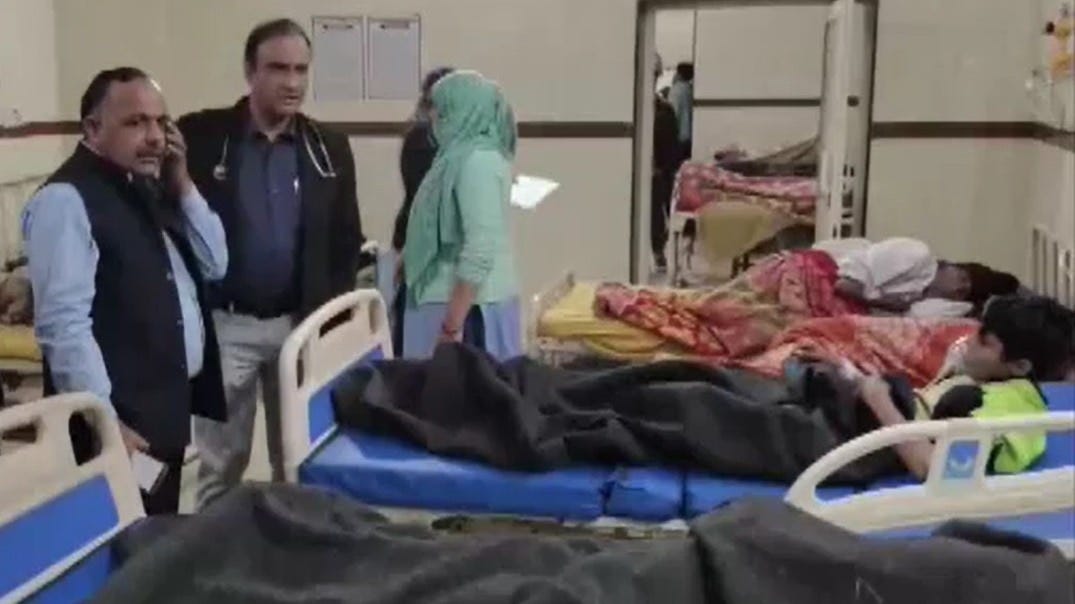
24 people (mostly children) hospitalized in Rajasthan after inhaling toxic fumes;.
Cause: Illegal chemical waste dumping site;.
Another day, another illegal dump turning a neighborhood into a gas chamber. 24 kids in the hospital because someone wanted to save a few rupees on waste disposal. We have laws, but clearly, we lack the spine to enforce them.🔗
🔫 Maoists Lay Down Arms
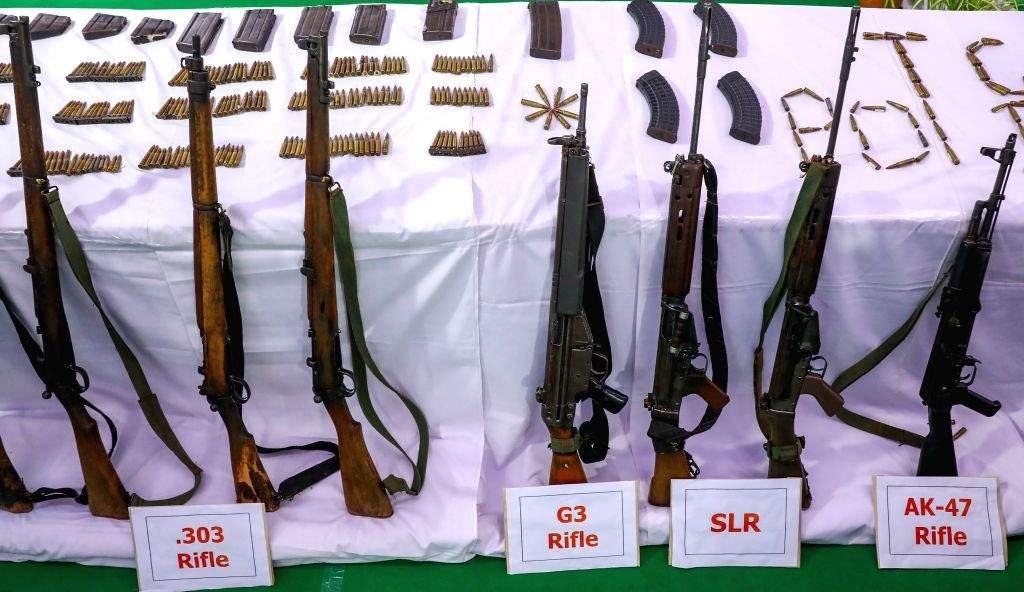
37 Maoists surrendered to Telangana Police;.
Includes three cadres with a combined reward of ₹20 lakh;.🔗
🕵️Google Nears the $4 Trillion Club
Alphabet (Google) shares surged, pushing market cap near $4 Trillion;
Rally fueled by AI optimism and a favorable antitrust ruling (judge said no need to divest Chrome);.
Google is now worth nearly $4 trillion. That’s roughly the GDP of India. And to think, they make a lot of that money just by knowing that you searched for “symptoms of flu” at 3 AM.
The “AI Wars” narrative initially hurt Google (perceived as lagging behind OpenAI/Microsoft), but they have bounced back with Gemini. The crucial news is the antitrust relief—keeping Chrome means keeping the data pipeline intact. This regulatory win, combined with AI integration into Search/Cloud, has restored investor faith.🔗
🧐 The Deep Dive
☢️ The Silent Poison: Why Bihar’s Infants are Drinking Uranium
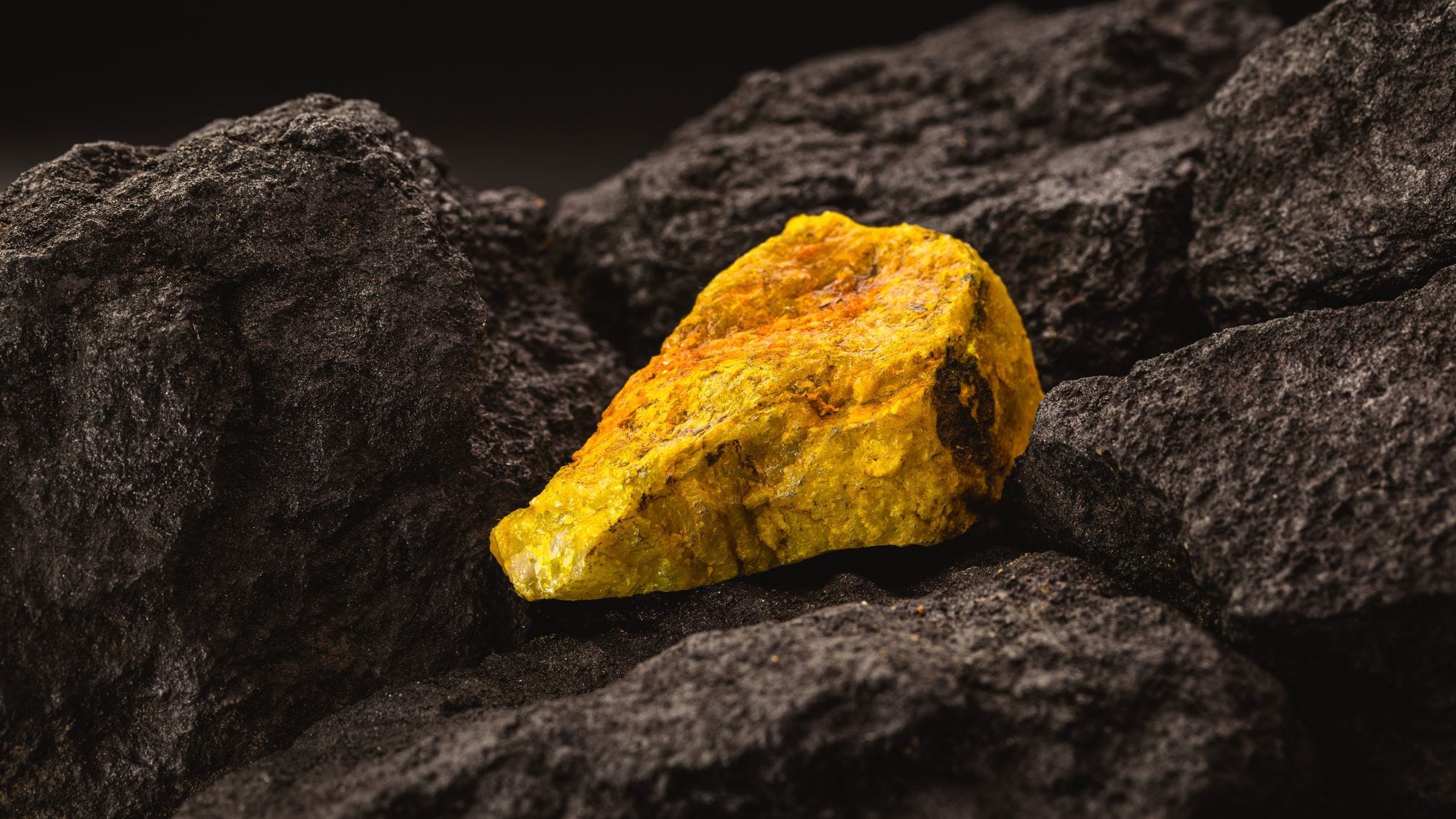
A new study published in Scientific Reports found elevated Uranium (U-238) levels in the breast milk of mothers in Bihar. The sample size was small (40 mothers across six districts), so the findings are concerning but not yet definitive for the whole state. According to the researchers’ risk-assessment model, about 70% of the infants studied may be at risk of non-carcinogenic health effects, though this is a modeled risk, not a confirmed medical diagnosis.
Important note: Experts emphasize that the detected uranium levels are still below the World Health Organisation’s limit for drinking water, and there is currently no established permissible limit for uranium in breast milk, making interpretation cautious.
The “Too Long; Didn’t Read” Explained: This isn’t a nuclear leak. It’s a chemistry disaster. Naturally occurring uranium in rocks is dissolving into the groundwater because we are pumping water out too fast. Mothers drink the water (or eat crops grown with it), and the metal moves into their milk. Now, babies in districts like Katihar and Samastipur are ingesting heavy metals with their first meal. That said, the study did not directly test these mothers’ water or food sources, so groundwater over-extraction is a strong hypothesis—not yet proven in this dataset.
Angle 1: The Geology (How did it get there?) Think of the earth beneath Bihar as a sponge made of uranium-rich silt from the Himalayas. Normally, the uranium stays locked in the sediment. But due to excessive groundwater extraction for agriculture, the water table has dropped. This introduces oxygen into deep aquifers, triggering a chemical reaction (oxidation) that makes the uranium soluble. It leaches into the water, which is then pumped back up for drinking and irrigation. This mechanism is consistent with known geochemistry in other regions, though the current study didn’t trace the exact geochemical pathway.
Angle 2: The Biology (What does it do?) Uranium is a nephrotoxin (kidney poison) and a neurotoxin (brain poison).
Kidneys: It chemically damages the renal system, which filters waste.
The Brain: This is the scariest part. Heavy metals can cross the blood-brain barrier. For an infant, whose blood-brain barrier is still developing, this exposure can lead to neurodevelopmental delays. We aren’t just talking about physical sickness; we are talking about a potential drop in IQ and cognitive function. However, the study itself did not measure developmental outcomes—these are potential risks inferred from existing toxicology literature, not observed effects in Bihar infants.
We aren’t just talking about physical sickness; we are talking about a potential drop in IQ and cognitive function. Again, this is a theoretical concern, not yet a documented effect from this specific exposure level.
Angle 3: The Doctor’s Dilemma (The Paradox) You might think, “Stop breastfeeding immediately!” But experts say NO. Why? Because it’s a choice between a rock and a hard place.
Option A (Breastfeed): The baby ingests trace uranium.
Option B (Formula): You likely mix the formula with the same contaminated groundwater, giving the baby a direct, higher dose of uranium, plus the risk of waterborne diseases like cholera or typhoid.
The Verdict: Breast milk filters out some toxins (most uranium is excreted by the mother in urine), so it remains the “safest” unsafe option.
Angle 4: The Meta-Narrative (Cognitive Capital) This is an economic time bomb. Bihar relies on its youth population (the “demographic dividend”) for future growth. If a generation of children is exposed to neurotoxins today, the state faces a future workforce with aggregate cognitive stunting. This part is an extrapolation—not something the study concludes outright—but it mirrors long-observed patterns where environmental contamination undermines human capital.
This is how environmental degradation silently enforces poverty—by physically and mentally eroding the human capital of a region before they even start school.
The Final Question: “The government plans to spend ₹1 lakh crore on tunnels to speed up Mumbai traffic. Would you prefer a faster commute if it meant travelling underground, or is the chaotic view of the city part of its soul? Reply with your thoughts.”
Sign-Off: Stay sharp, stay curious, and if you see a 20-foot saffron flag today, you know where you are.
Aditya S.
Editor, The India Brief