
India's New 3D Printed Rockets
☕ India’s Morning Briefing: Sun, November 23


Hello, and welcome to the brief.
Good morning, friends.
Today feels like a glitch in the simulation. India is literally printing rockets to launch satellites and India, Canada and Australia are getting cozy. The world is chaotic, the news is weird, and honestly, the only thing making sense right now is that cricket still manages to break our hearts. Buckle up.
Welcome to the 163rd edition of The India Brief
Do not miss the deep dive in the end.
1. 🏛️ Power, Politics & The Republic
👮 BJP Seizes Control of Bihar’s Police Machinery
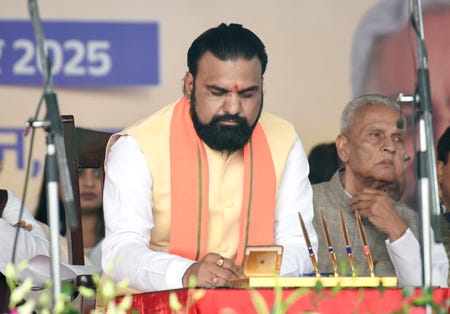
Home Ministry transferred to BJP’s Samrat Choudhary; first time JD(U) lost this portfolio.
BJP also secures Health, Land & Revenue, and Industries portfolios.
Nitish might sit on the throne, but the BJP just walked off with the sceptre, the crown jewels, and the gate keys. 🔗
🌍 PM Modi Targets Drug-Terror Nexus at G20
Proposed G20 initiative to counter drug-terror financing networks.
Called for Global Traditional Knowledge Repository and Healthcare Response Team.
Advocated for GDP-neutral development metrics focusing on human capital. 🔗
🗳️ West Bengal & Punjab Clash with Centre
Punjab CM Bhagwant Mann opposes Constitution (131st Amendment); fears losing Chandigarh.
Bengal activists term “Special Intensive Revision” of voters as “votebandi” (disenfranchisement).
BJP defends electoral roll cleanup; opposition alleges targeted deletions.
Nothing says “cooperative federalism” like two state governments convinced the Centre is trying to erase their borders and their voters.
Find the Pattern: Punjab’s anxiety over Chandigarh mirrors the 1980s Rajiv-Longowal accord tensions. The Centre tinkering with territorial or electoral status in border states has historically been the precursor to deep sub-nationalist unrest, signalling a return to a more centralised, friction-heavy federal management style. 🔗
2. ✈️ The Nation
🚀 Space Tech Startup Agnikul Raises ₹150 Crore for Reusable Rockets
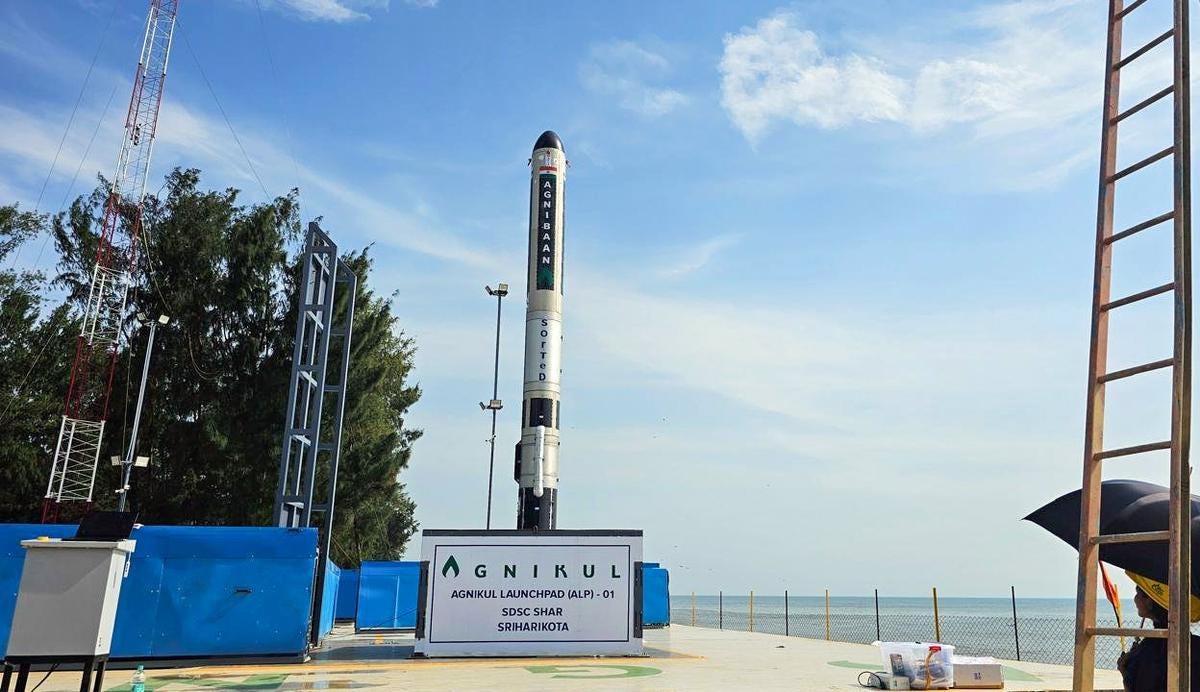
Funding Secured: Agnikul Cosmos raised ₹150 crore ($17 million) in Series C funding; valuation hits $500 million.
Tech Focus: Capital to scale Agnibaan rockets; build reusable launch vehicles; advance 3D-printed engine tech.
Infrastructure: Developing integrated space campus on 350 acres in Tamil Nadu; targeting commercial satellite launches by 2026.
If you thought 3D printing was just for making plastic Yoda heads or replacement parts for your dishwasher, think again. Agnikul is printing rocket engines and getting paid half a billion dollars to do it.
The Bottom Line: Investors aren’t just throwing money at cool rockets; they are buying a ticket to the low-cost orbital delivery market. With SpaceX dominating heavy-lift, the race is on for the “FedEx of Space”—smaller, cheaper, faster deliveries. Agnikul’s 3D-printing tech reduces manufacturing time from months to weeks, directly optimising for speed and cost-efficiency, the two most critical currencies in the commercial space race. 🔗
🔫 Pune Police Bust Arms Ring with Drones
Raid in Umarti, MP; 47 detained, four illegal factories demolished.
Used drones for surveillance in hostile terrain.
Seized pistols, magazines, and manufacturing equipment.🔗
🚂 Indian Railways Crosses 1 Billion Tonne Freight Mark
Record Breaking: Railways achieved 1,020 Million Tonnes freight loading for FY 2025-26 by Nov 19.
Key Drivers: Coal (505 MT) leads; Iron Ore and Cement follow; daily average loading hits 4.4 MT.
Efficiency: Boost credited to Dedicated Freight Corridors and new Bulk Cement Terminal policy.🔗
🏏 Jitesh Sharma’s “Super Over” Blunder Costs India A
The Match: India A vs Bangladesh A (Asia Cup Semis) tied at 194 runs; forced Super Over.
The Collapse: India A scored 0 runs in Super Over; lost 2 wickets; Bangladesh A chased target easily.
The Blunder: Captain Jitesh Sharma picked himself over in-form Vaibhav Suryavanshi (who scored 50 off 19); faced severe backlash.
The Bottom Line: Why did the captain pick himself? We Don’t Know. And that is the important thing to remember. These are high-pressure moments, and the real calculations going on in the back of the heads, we just don’t know of those. Also, we live and learn, all of us. 🔗
3. 🌐 The Global Chessboard
🤝 India, Australia, Canada Launch Trilateral Tech Partnership (ACITI)
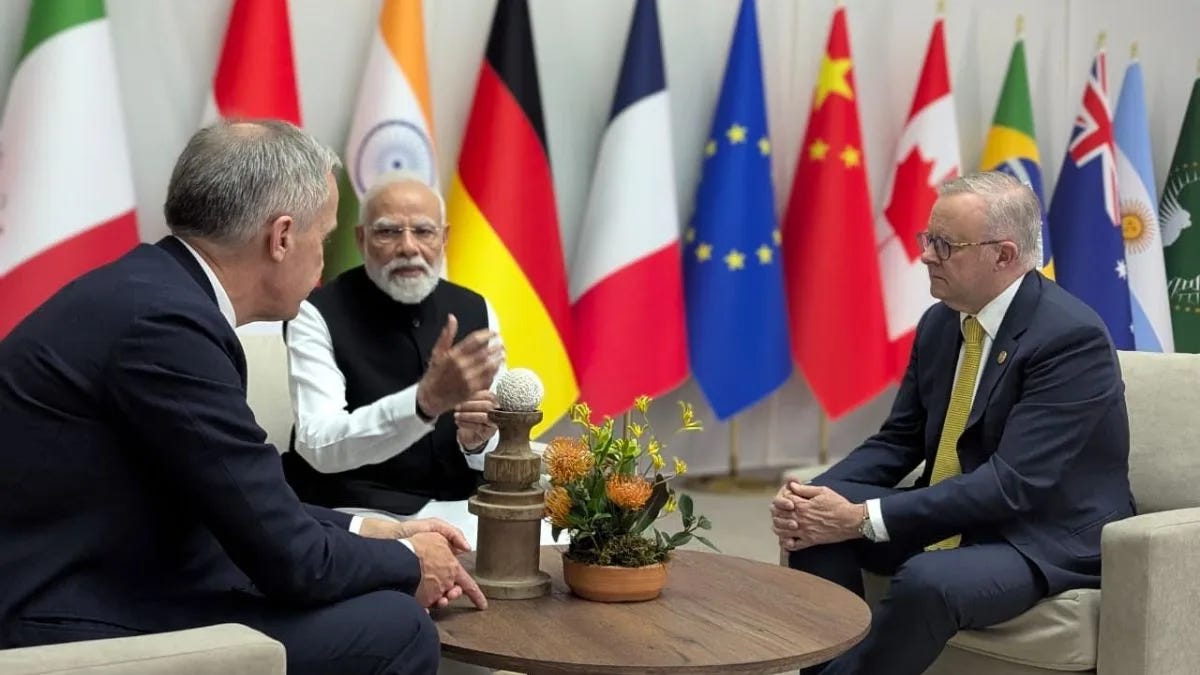
New Alliance: PM Modi, Australian PM Anthony Albanese, and Canada’s PM Mark Carney launched ACITI Partnership.
Strategic Goals: Focus on critical minerals, clean energy, and AI; aim to diversify supply chains away from single-source dependencies.
Geopolitics: Partnership announced at G20 sidelines; working group to operationalize framework by Q1 2026.
Three countries walked into a bar—sorry, a summit—and decided they didn’t want to buy all their batteries from the same shop anymore. Also, note the Canadian PM Mark Carney in the mix—politics moves fast! It’s the diplomatic equivalent of creating a “Close Friends” group on Instagram so you can share your cool tech secrets without that one guy (Beijing) seeing them.
The Deeper Take: The immediate effect is a nice photo-op, but the second-order effect is the formalisation of a “Tech NATO.” By linking Canada’s raw minerals, Australia’s mining infrastructure, and India’s manufacturing scale, this alliance creates a closed-loop ecosystem. The reaction? Expect retaliatory export controls from China on critical processing technologies, forcing this new alliance to speed up their decoupling whether they are ready or not. 🔗
⚛️ Japan Restarts Largest Nuclear Plant
Kashiwazaki-Kariwa plant to restart after 15 years.
follows shutdown post-Fukushima disaster.
Driven by energy security needs and rising costs.
Japan decides that potential radiation is slightly less scary than definitely running out of electricity.
Follow the Currency (Energy): The trauma of Fukushima has been outweighed by the cold economics of LNG import dependency. Japan is prioritising industrial competitiveness and grid stability over public sentiment, marking a definitive global pivot back to nuclear energy as the only viable baseload alternative to fossil fuels. 🔗
🏛️ RBI Interlinks UPI with Europe’s Instant Payment System
Policy Shift: RBI announced interlinking UPI with Europe’s TIPS (Target Instant Payment Settlement).
Goal: Enable seamless, real-time cross-border remittances between India and Eurozone.
Strategy: Part of G20 roadmap for cheaper, faster international transfers; follows Singapore/UAE linkages.
Sending money to Europe used to involve three banks, a fax machine, and a sacrifice to the gods of SWIFT. Now, it’s going to be as easy as paying for your chai. Europe, prepare for the UPI revolution—we apologize in advance for the QR code addiction.🔗
4. 🧐 Deep Dive: The FedEx of Space
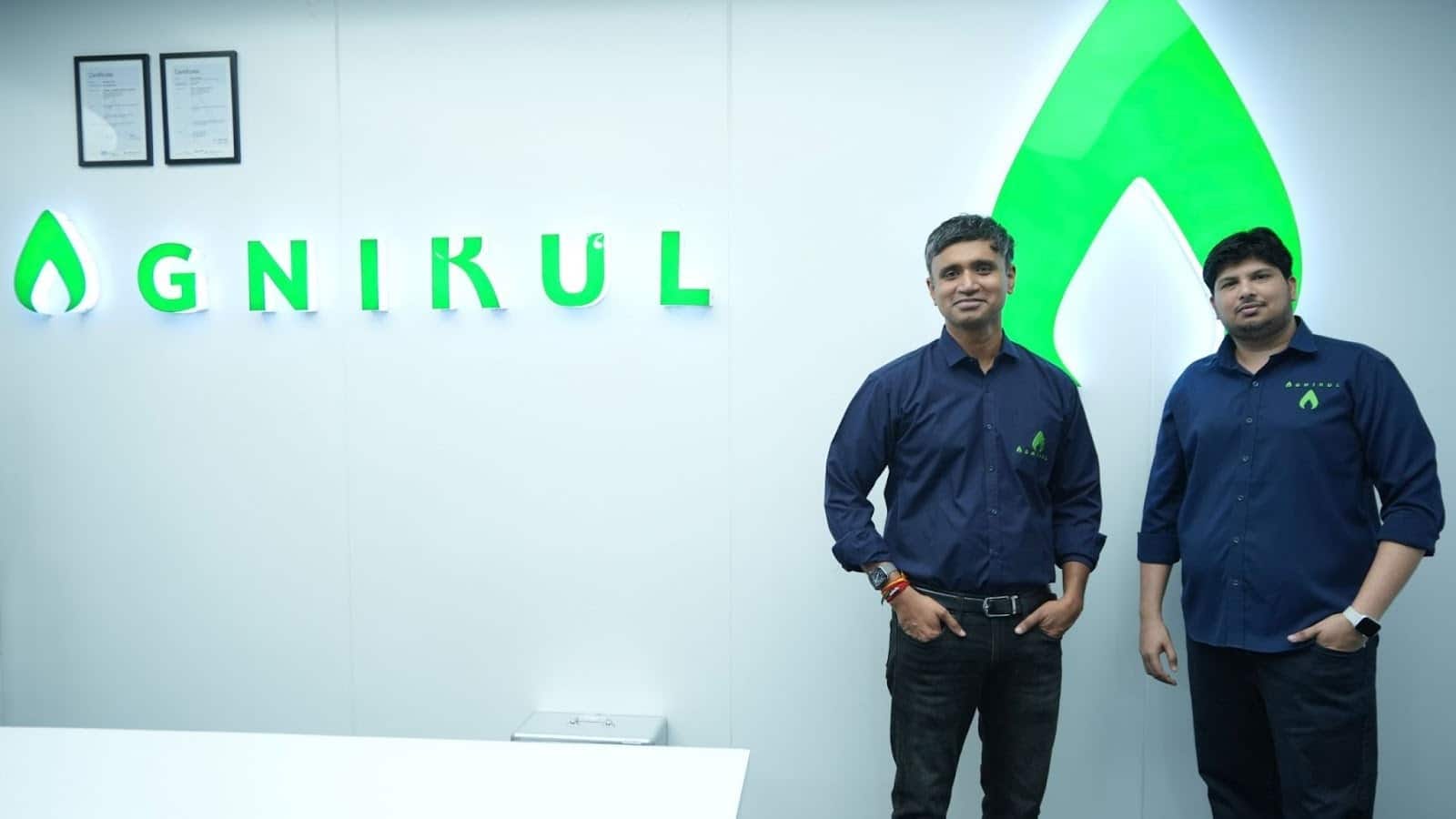
While the nation mourns the tragic loss of a Tejas pilot, a quiet revolution is cementing itself in Chennai. Agnikul Cosmos raising ₹150 crore ($17 million) in a Series B round isn’t just another startup funding announcement—it is the definitive arrival of India’s “New Space” economy.
1. The Tech Pivot (3D Printing): Unlike traditional rockets that are assembled from thousands of parts (introducing thousands of failure points), Agnikul’s Agnilet engine is 3D-printed as a single piece. This is manufacturing wizardry. It reduces build time from months to days, allowing for “on-demand” launches. If a satellite needs to go up next week, Agnikul wants to be the one to take it.
2. The Strategic Shift (Privatisation): For decades, space was the exclusive playground of ISRO. The government’s IN-SPACe policy has effectively broken this monopoly. ISRO is moving to handle deep space exploration (Moon, Mars, Venus), leaving the “delivery truck” business of low-earth orbit (LEO) to private players. Agnikul is building the “FedEx” of space: reliable, frequent, and relatively cheap transport for small parcels (satellites).
3. The Geopolitical Angle: The valuation of $500 million suggests investors see Agnikul as a critical node in global data infrastructure. As the West decouples its supply chains from China, and Russian Soyuz rockets remain sanctioned, the world needs a neutral, reliable launch provider. India is positioning itself to be that provider. Agnikul isn’t just building rockets; they are building sovereign launch capacity that doesn’t rely on the taxpayer.
Question of the Day
Given the UK is tightening immigration rules to cut numbers, but India is demanding easier visas for a Free Trade Deal—would you trade easier access to Scotch whisky in India for easier access to London for Indian professionals?
Reply to this email with your thoughts.
Stay sharp,
Aditya S.
Editor, OneRead.News