
Trump Approves 500% Tarrif Bill on India
☕ India’s Morning Briefing: Sat, January 10


Hello, and welcome to the brief.
Good morning, family.
If one were to take the pulse of the world this Friday, one might find it suffering from a distinct case of tachycardia ( a rapid heart rate). In New Delhi, the political theatre has descended into a full-blown gladiator like contest involving federal agencies and state chieftains, while in Washington, the spectre of “America First” has returned with a vengeance, threatening to turn the global energy market into a casino where the house, specifically, the White House, always wins.
We are navigating a news cycle defined by friction. But amidst the cynicism and the chaos, there is chemistry, quite literally. We have trains running on hydrogen in Haryana and roads being paved with dried grass.
Sorry for the two days of silence, we had a technical glitch.
Welcome to the 205th edition of The India Brief
Politics, Economy, and the Law
Lalu’s “Criminal Syndicate”: Court Frames Charges
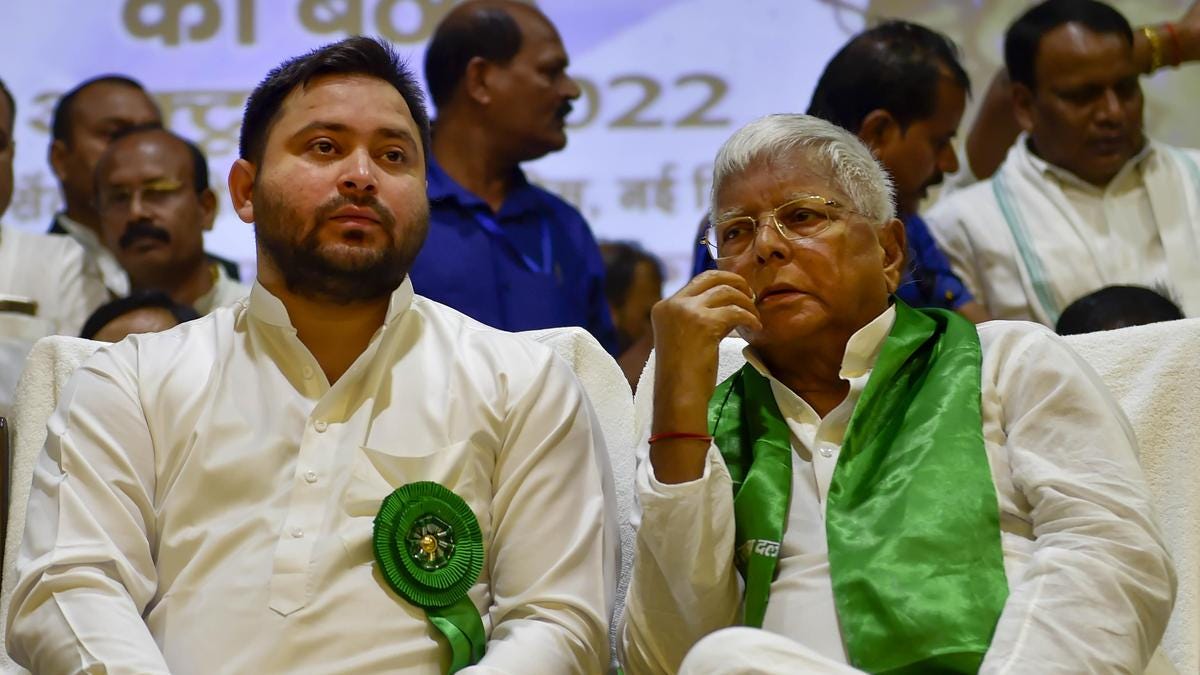
⚖️ Verdict: Delhi Court frames corruption charges against Lalu, Rabri, and Tejashwi.
🚂 Scam: Alleged “land-for-jobs” racket in Railways labeled a “criminal syndicate.”
📉 Impact: Chargesheet alleges ₹600 crore proceeds; trial set to destabilise RJD.
The Take: Calling a political family a “syndicate” is the kind of judicial shade that usually requires SPF 50. This legal framing moves the case from simple graft to organised crime, stripping away the “political vendetta” defence just as Bihar’s electoral clock starts ticking.
Mamata vs. The Agency: Street Protests Erupt
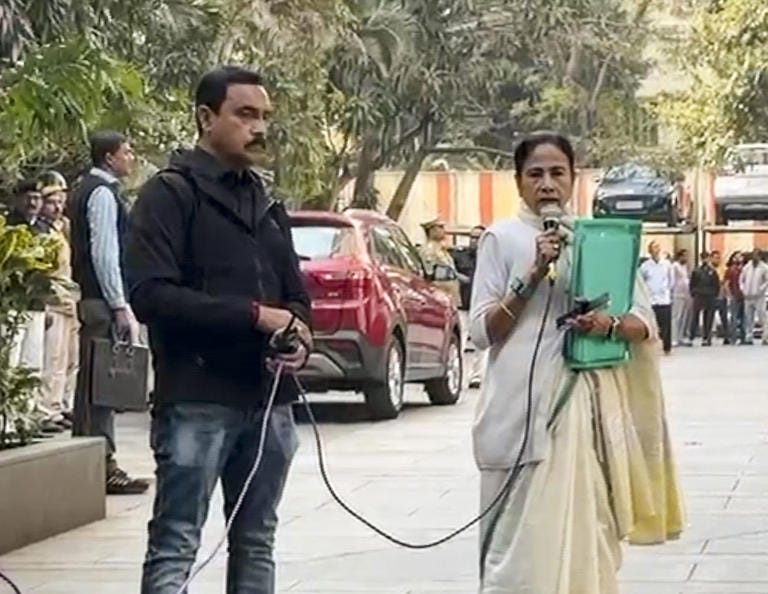
🏛️ Raid: ED targets I-PAC and poll strategist Pratik Jain in coal smuggling probe.
🚶♀️ Reaction: Mamata Banerjee leads street march; accuses BJP of stealing election data.
📂 Conflict: ED claims CM “removed evidence” during raids; approaches High Court.
The Take: A Chief Minister crashing a federal raid is the kind of plot twist even Netflix writers would reject as “too unrealistic.” This is a constitutional crisis in slow motion; targeting the TMC’s digital brain (I-PAC) suggests the agency wars have moved from financial crimes to electoral infrastructure.
India’s First Hydrogen Train Begins Trials in Haryana
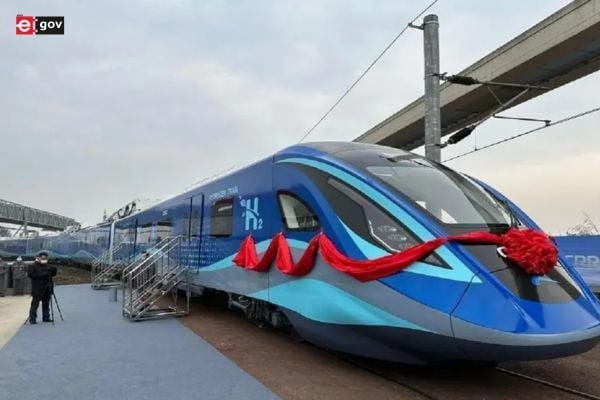
🚄 Milestone: Hydrogen train starts trial run on Jind-Sonipat route.
💧 Tech: Fuel cells generate power; only emission is water vapour.
💰 Cost: High operational costs limit use to niche, scenic routes.
The Take: Finally, a train that sweats water instead of diesel fumes. It’s a glittering moonshot for “Net Zero,” but until green hydrogen costs plummet, this remains a premium showpiece rather than a commuter solution.
Court Overrules Censor Board on Vijay’s ‘Jana Nayagan’
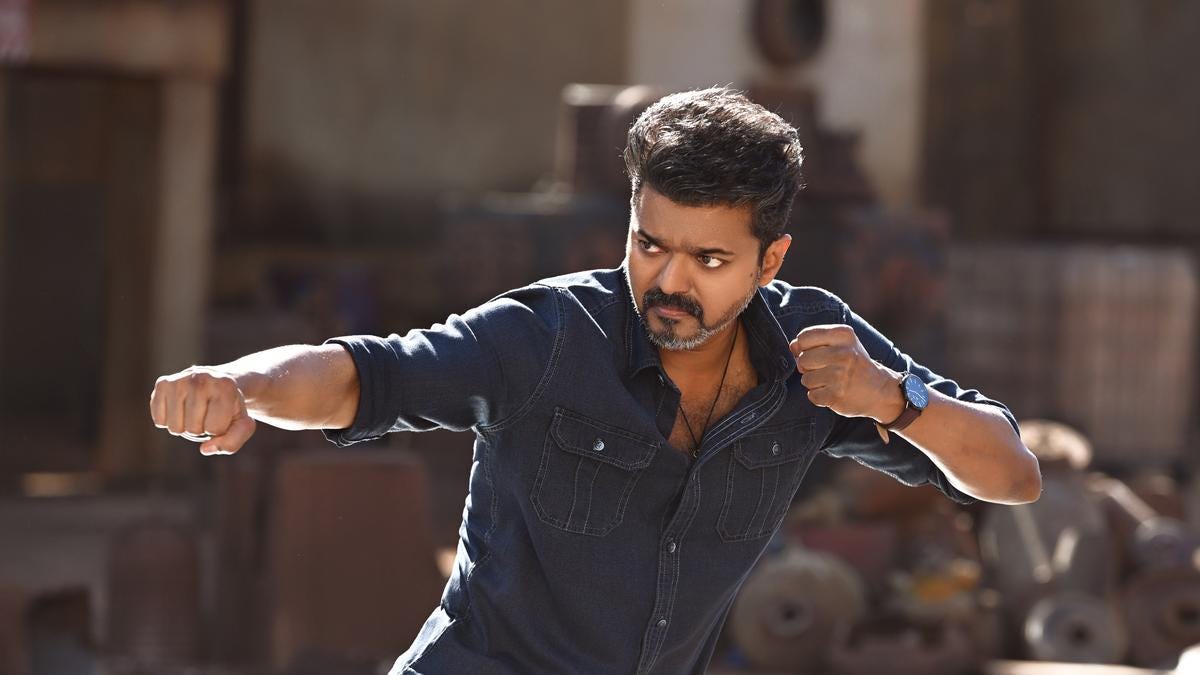
🎬 Dispute: CBFC demanded 27 cuts to actor Vijay’s political thriller.
🔨 Ruling: Madras HC orders U/A certificate; slams “motivated” complaints.
🗳️ Context: Vijay’s political entry adds volatility; film releases amid tension.
The Take: Nothing says “serious politician” like a government ban. The court prevented the Censor Board from becoming a political gatekeeper, but the delay has already gifted Vijay the most valuable currency: a victim narrative.
HDFC Bank Slides 4.5% as Deposit Growth Lags
📉 Slump: Stock falls 4.5% in two days after Q3 business update.
🏦 Data: Loan growth lags; CD ratio remains uncomfortably high.
💸 FIIs: Foreign investors sell off; ADRs crash 6% in US markets.
The Take: The market “Elephant” is dancing with two left feet. The merger’s digestion is dragging; investors are punishing the bank for prioritising deposit gathering over aggressive lending in a tight liquidity environment.
Scientists Turn Stubble into Bio-Bitumen for Roads
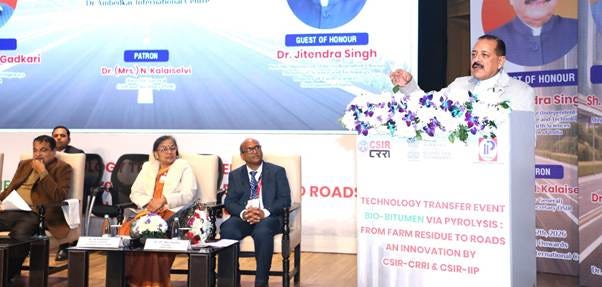
🧪 Innovation: CSIR transfers technology to make bitumen from biomass.
🌾 Source: Uses agricultural waste (parali) to pave roads.
🛣️ Goal: Aims to cut stubble burning pollution and reduce bitumen imports.
The Take: Turning choking smoke into roads is poetic justice. This circular economy win solves two massive headaches: seasonal air pollution and rising infrastructure costs, simultaneously, if it can be scaled beyond the lab - that is the important question to be answered now.
Government Ends ASI Monopoly on Monument Conservation

🏰 Policy: Govt opens monument conservation to private firms.
🏗️ Model: Private agencies can bid for restoration using CSR funds.
📜 Fear: Experts worry about “Disneyfication” over archaeological integrity.
The Take: We are one step away from the “Taj Mahal presented by Reliance.” Outsourcing conservation risks prioritising aesthetic tourism over history, but might finally fix the ASI’s chronic funding and manpower shortages. Do we need more rules or just more sensibility?
IT Giants Face AI Reality Check as Earnings Season Begins
💻 Preview: TCS, Infosys, Wipro to release Q3 results starting Jan 12.
🤖 Focus: Market watching AI deal pipeline vs. discretionary cuts.
📉 Trend: Hiring slows; growth flat due to furloughs and macro headwinds.
The Take: Tech giants are talking about AI so much they might replace CEOs with chatbots. Valuations now depend entirely on how quickly these legacy players can monetize Generative AI beyond just press releases.
🌍 World Watch
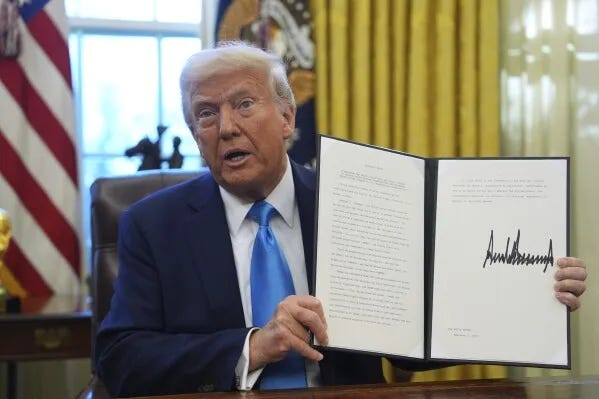
Trump Approves Bill Threatening 500% Tariff on Russian Oil
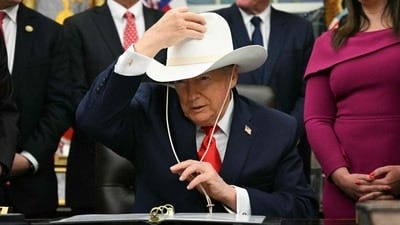
🛢️ Bill: Trump backs “Sanctioning Russia Act”; 500% tariffs on buyers.
🎯 Targets: Names India, China, Brazil for buying Russian crude.
🇮🇳 Impact: Threatens India’s $120B export market to US if oil trade continues.
The Take: Trump treats trade policy like a mafia shakedown. By weaponising consumer market access, he forces New Delhi to choose between cheap energy security and its largest export partner, testing India’s strategic autonomy.
US Withdraws from India-Led International Solar Alliance
🚪 Exit: US withdraws from 66 global bodies, including ISA.
☀️ Reason: White House calls them “redundant” and “misaligned” with interests.
🌏 Vacuum: China expected to fill leadership void in global climate bodies.
The Take: America is taking its bat and going home. By exiting the ISA, the US dismantles the multilateral order and cedes the renewable energy diplomatic high ground to Beijing and New Delhi.
China Blocks Rare Earth Exports to Japan Over Taiwan
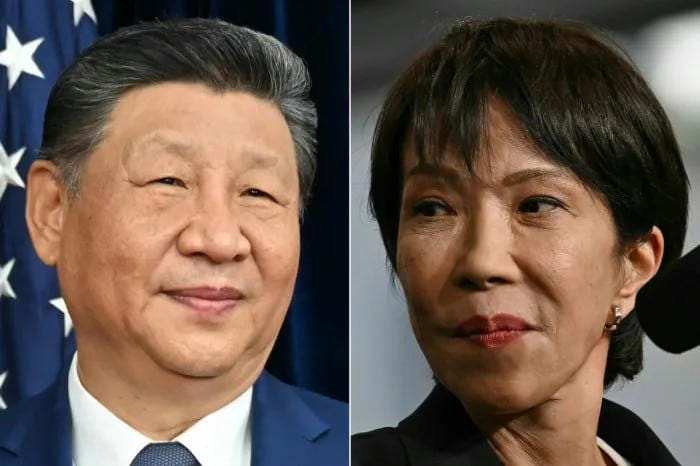
🛑 Ban: China chokes off rare earth exports to Japan over Taiwan stance.
🇯🇵 Impact: Hits Japan’s high-tech manufacturing and EV supply chains.
♟️ Context: Retaliation for Japan’s alignment with US security policies.
The Take: Beijing is reminding Tokyo that electronics don’t run on sushi. Weaponising critical minerals highlights the extreme vulnerability of global supply chains to geopolitical tantrums, pushing Japan closer to the US security umbrella.
🌟 The Good Stuff
Happy News
🏏 Dhoni’s New Game: MS Dhoni merges his team to launch a national league for Padel, aiming to make it India’s next big sport. Link

🧪 Genius Gen-Z: 81 Indian-origin students named in the top 300 scholars of the Regeneron Science Talent Search for breakthroughs in cancer and AI. Link
🚫 Child Marriage Free: Balod district in Chhattisgarh becomes the first district in the state to be officially declared Child Marriage Free after intensive community campaigns. Link
🌸 Eco-Blossoms: A Manipur entrepreneur wins a climate award for replacing plastic flowers with dried natural flowers, supporting hundreds of local farmers. Link

Deep Dive: The Petro-Politics of 2026: The 500% Gun to India’s Head
The global energy market is currently staring down the barrel of a legislative gun, and the finger on the trigger belongs to Donald Trump. The “Sanctioning Russia Act of 2025,” now greenlit by the US President, is not just another sanctions package; it is a fundamental rewriting of the rules of engagement for the Indian economy.
For the last three years, India has performed a high-wire act that diplomats call “Strategic Autonomy.” In plain English, this meant buying cheap Russian oil to keep domestic inflation low while simultaneously courting American investment for technology and defense. It was a strategy of having your cake and eating it too. This new Bill effectively smashes the cake plate. By threatening a 500% tariff on goods from any country that buys Russian oil, Washington is weaponising access to the American consumer.
The mechanism is brutal in its simplicity. It doesn’t sanction the oil itself; it sanctions the buyer’s entire economy. If India continues to import Russian crude (which currently makes up over 40% of its basket), a 500% tariff would apply to Indian textiles, pharmaceuticals, and IT services entering the US. Given that the US is India’s largest trading partner with over $120 billion in annual trade, this is less of a policy shift and more of an economic nuclear threat.
Why now? Unless you’re living under a rock, you must have heard of Venezuela and how the US recently went in and kidnapped its president and flew him over to New York. Well, since then, Trump and US have gained access over the stock of oil in Venezuela, which is huge. Which means, US has the supply, they need the demand now. So, why cut your own prices to sell cheaper, when you can make your customers buy only from you through bullying. India is now forced to calculate the true cost of “cheap” oil. If the price includes losing the American market, that Russian crude just became the most expensive oil in history.
Sign-off
Question of the Day: If you had to power your commute with either Hydrogen or pure willpower, which one would run out first on a Monday morning?
Stay sharp.
Aditya S. Editor-in-Chief, OneRead.News