
☕ India’s Morning Briefing: Wed, Oct 08
134th Edition | 08 October 2025


Good morning.
Today, India finds itself in a room with Russia, China, and the Taliban, all agreeing on something for once. That tells you something about the state of the world. Let’s get into it.
🔑 The 4 Big Stories Today
1. 🗳️ Supreme Court Questions Bihar’s Missing Voters Ahead of Polls
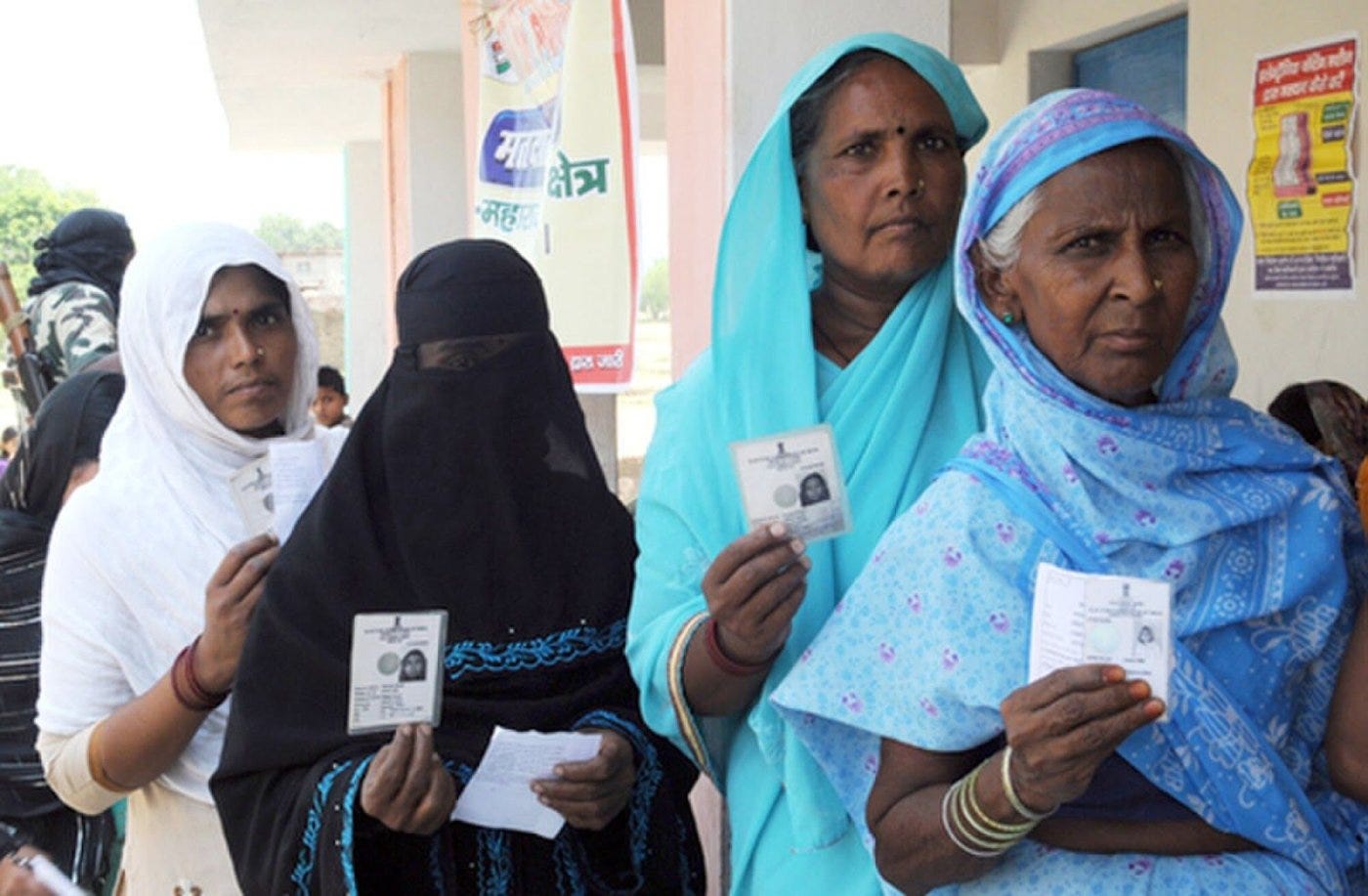
SC directs Election Commission; furnish details on 3.66 lakh excluded voters
Ahead of Bihar Assembly polls; to be held in November
EC claims most are new voters; no complaints files
The Chessboard: This isn’t just a clerical error; it’s a move on the grand chessboard of democratic legitimacy. By asking to furnish all details of the electoral roll, the Supreme Court is making sure the trust people have on the EC remains intact. 🔗
2. 🇦🇫 India Joins Taliban, Russia, China & others to Oppose US Military Base in Afghanistan
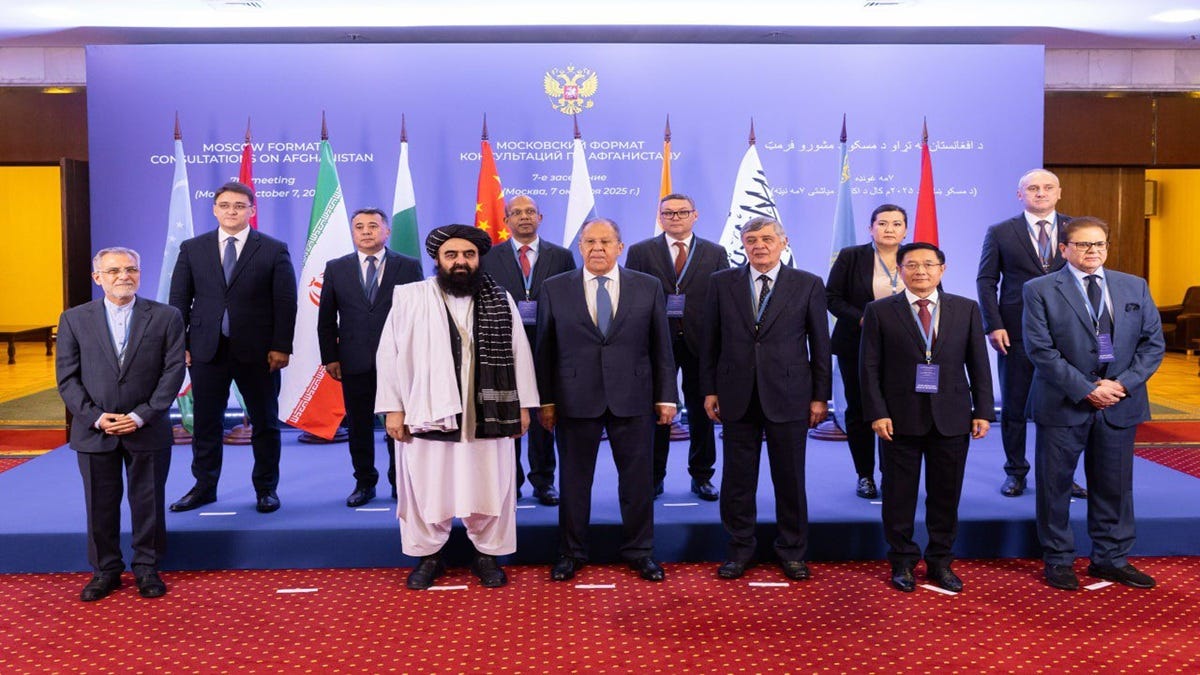
India participates in Moscow Format talks; on Afghanistan
Joint statement opposes; foreign military infrastructure in the region
Seen as rejection; of US President Trump’s call for Bagram airbase
Taliban Foreign Minister; attends as full member for first time
Well, look at that. India, Russia, China, and the Taliban all in a room agreeing on something.
The Deeper Take: This is India playing the great game. By aligning with the Russia-China axis on Afghanistan, Delhi is hedging against US unpredictability and carving out its own sphere of influence in Central Asia, prioritising regional stability over its Western partnerships. 🔗
3. 🚗 Supreme Court Mandates New National Road Safety Rules
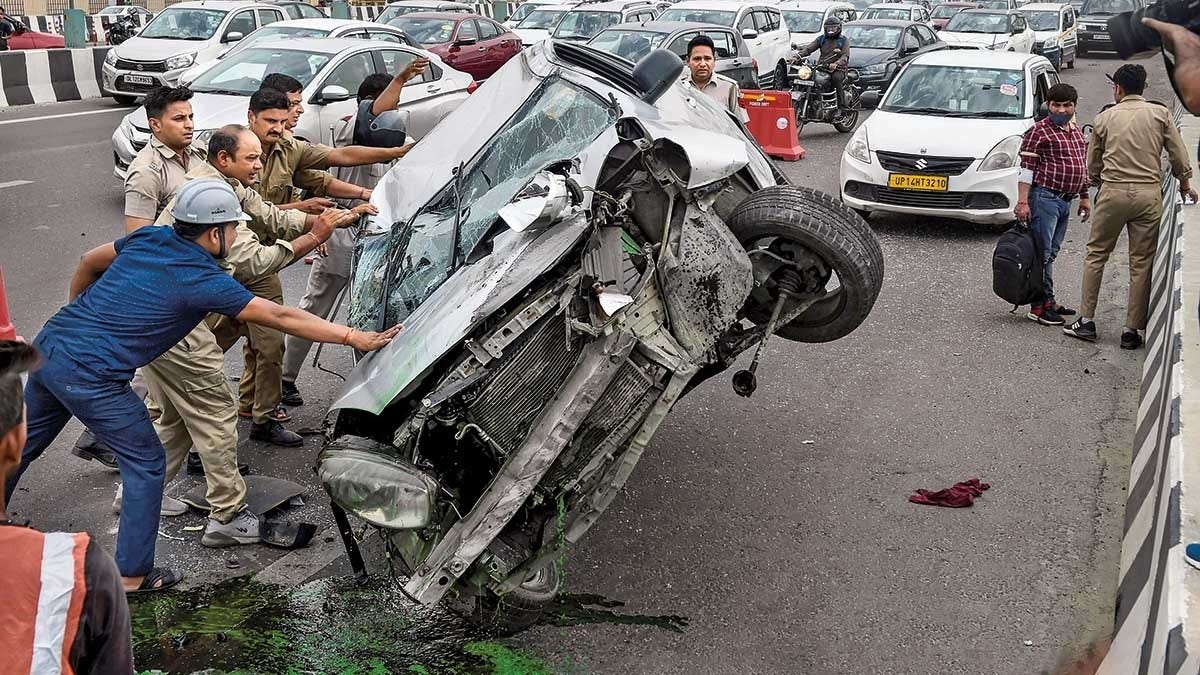
SC directs all states & UTs; frame comprehensive rules
6-month deadline; to implement the new framework
Focus on pedestrian safety; helmet compliance, wrong-lane driving
The Supreme Court has had enough of our roads being a real-life version of Mad Max and has given the states six months to sort it out. But, as we have seen in the past, just rules don’t do anything. It’s the collective mindset that needs to be changed. And given the usual pace of bureaucratic action, we can expect safe roads sometime in the next century. 🔗
4. ⚛️ Physics Nobel Awarded for Making Quantum Weirdness Visible
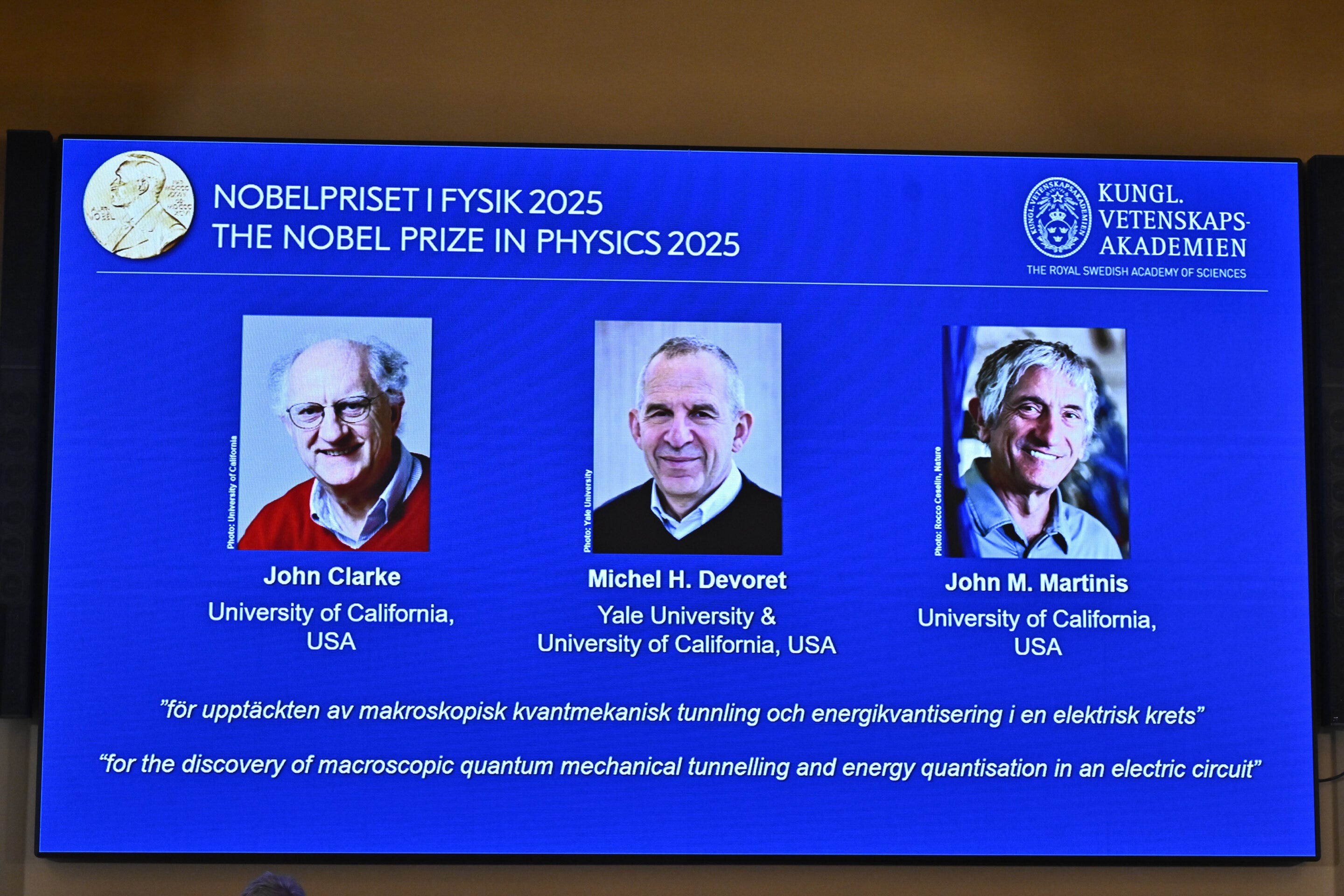
John Clarke, Michel Devoret, John Martinis; win 2025 Nobel
For discovering; macroscopic quantum mechanical tunnelling
Showed large systems; can exhibit bizarre quantum behaviours
Work is foundational; for quantum computing development
Three scientists win a Nobel for proving that a large electric circuit can quantum tunnel (pass a block) and behave like a single, weird atom. 🔗
⚡️Quick Hits
Courts & Governance
SC to hear plea for CBI probe into Karur stampede that killed 41 🔗
National Board of Examinations addresses alleged NEET PG data leak 🔗
Around 1,500 CRPF personnel deployed in Ladakh to maintain law and order. 🔗
PM Modi marks 25 years in public service, reiterates commitment to a developed India. 🔗
The Analysis: The Supreme Court is optimising for constitutional authority. By intervening in electoral rolls, road safety, and stampede probes, it reinforces its role as the ultimate enforcer of public welfare when political and administrative will is lacking.
Economy & Business
Indian stock markets continue winning streak, Sensex closes at 81,926 🔗
UK Prime Minister arrives with a 100+ member trade delegation 🔗
Tata Capital’s IPO sees strong demand, covered almost 40% on day one 🔗
LG Electronics India raises ₹34.75 billion from anchor investors ahead of IPO 🔗
The Analysis: These stories are pieces of a larger puzzle: India’s economic decoupling from global volatility. Strong domestic IPOs and a major UK trade mission signal that both local and foreign capital see India’s internal market as a primary engine for future growth.
National Incidents
Landslide in Himachal Pradesh buries bus, killing at least 15 people 🔗
Wanted Nepalese gang leader with ₹1 lakh bounty killed in Delhi encounter 🔗
Heavy rains lash Delhi, diverting at least 15 flights from IGI Airport 🔗
The Analysis: These aren’t just random events; they are modern echoes of past failures. The landslide, the urban flooding, and even the existence of gang leaders show recurring patterns of inadequate infrastructure planning and regulation in the face of predictable environmental and systemic stresses.
Uplifting News
Snow leopard population rises to 83 in Himachal, up from 51 🔗
World Bank confirms India as the world’s fastest-growing major economy. 🔗
The Analysis: The immediate effect of these stories is positive. The second-order consequence is a boost in national morale and institutional credibility, reshaping future policy debates.
The Deep Dive
India’s New Seat at the Table
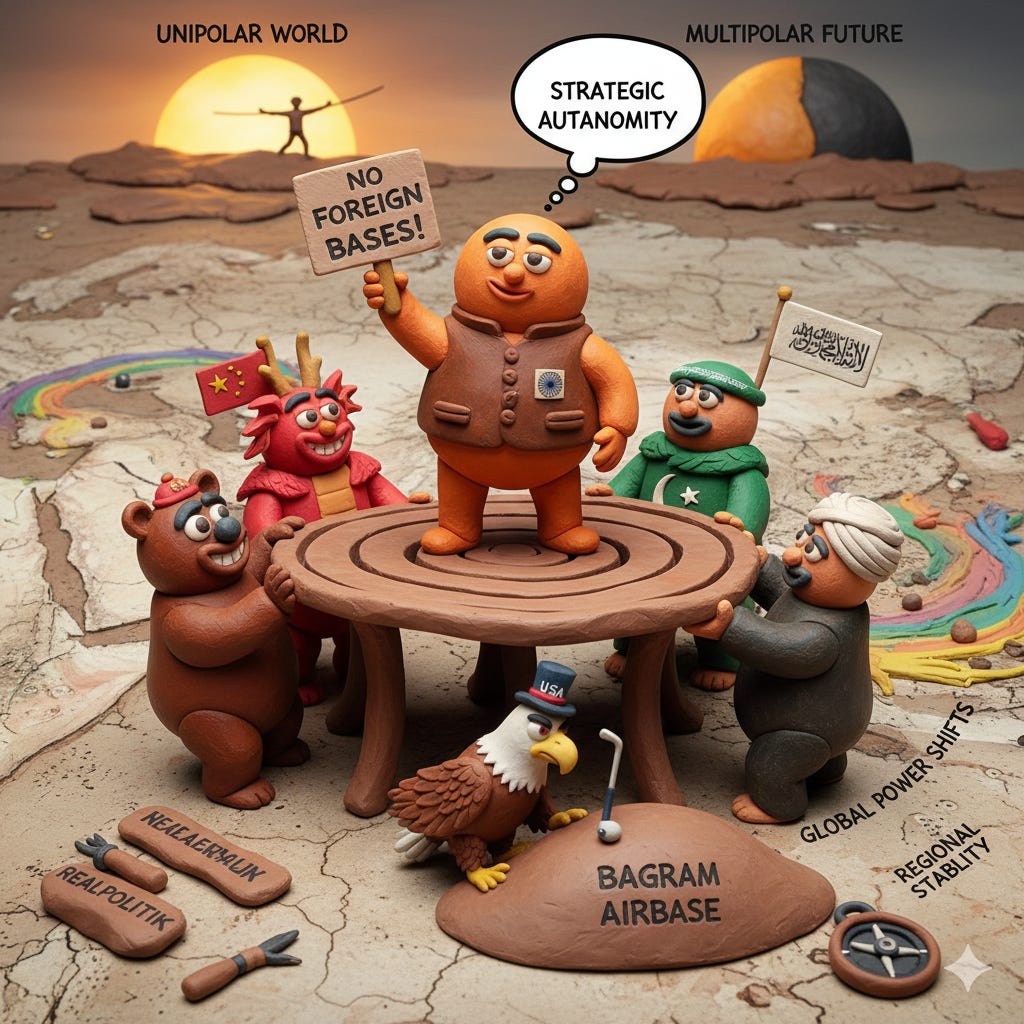
Yesterday, India sat down in Moscow with Russia, China, Pakistan, Iran, and the Taliban, and agreed to oppose any foreign military bases in Afghanistan. On the surface, this is about rejecting a specific demand from Donald Trump to reclaim the strategic Bagram airbase. But zoom out, and you’re watching a tectonic shift in global power dynamics, with India carefully choosing its position.
This isn’t just about one airbase; it’s about India playing its hand in the 21st-century version of the “Great Game.” For over a century, global powers have vied for influence in Central Asia. Today, that game is being played between a declining US-led unipolar world and an emerging, assertive Russia-China axis. India, traditionally non-aligned, is now practicing what it calls “strategic autonomy.” It’s refusing to be a junior partner in anyone’s club.
By siding with the Moscow Format, India is sending a clear signal: regional stability in its neighbourhood takes precedence over its strategic partnerships with the West. It’s a pragmatic calculation. An unstable Afghanistan is a direct threat to India, and cooperating with the powers who have the most influence there—including the Taliban regime it still doesn’t officially recognise—is seen as the most logical path to securing its interests. This move is a masterclass in multipolar diplomacy, where you find common ground with rivals to achieve a specific, critical objective. It’s a risky, high-wire act, but it’s the new reality of Indian foreign policy.
Stay sharp,
Aditya S.
Editor, The India Brief
P.S. While writing this, I was listening to this today: