
India is sitting on a ticking time bomb
☕ India’s Morning Briefing: Sun, November 02


Good morning India
Good morning. A declaration of ‘poverty-free’ status in Kerala sparks a political firestorm, household debt outpaces asset growth, and an Indian climate activist is celebrated by the world while jailed at home. Here’s what you need to know.
Welcome to the 143rd edition of The India Brief
Do not miss the deep dive in the end
The Big Picture: Politics & Economy
⚖️ Kerala Declared ‘Poverty-Free’; Opposition Cries ‘Hoax’
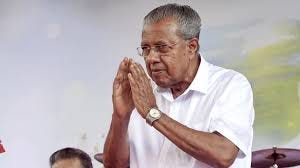
CM Pinarayi Vijayan; declares state ‘extreme poverty-free’.
Based on 2021 survey; identified 64,006 families, provided support.
Opposition boycotts session; calls claim “pure fraud,” cites conflicting central data.
The Bottom Line (Follow the Currency): The LDF government is optimising for narrative dominance and a powerful legacy achievement. The opposition is optimising to dismantle that narrative. This battle is less about precise poverty data and more about controlling the public’s perception of governance success. 🔗
💳 Household Debt is Outpacing Asset Creation, Says RBI
RBI data analysis; annual household debt grew 102% since 2019-20.
Financial asset growth; slower at 48% in the same period.
Shift in savings; mutual funds share jumps from 2.6% to 13.1%.
The Signal (And Then What?): The immediate effect is sustained consumption, which looks great on paper. But this is built on a fragile foundation. A future economic shock could trigger widespread defaults, straining banks, who will then tighten lending for everyone, choking off future growth. 🔗
📜 Major Financial Rules, Including New GST Slabs, Kick In
New GST system; two slabs replace four, 40% rate on luxury/sin goods.
Bank nominations; up to four nominees now allowed per account.
SBI Card fees; 1% charge on education payments via third-party apps. 🔗
⛏️ Union Minister Calls for ‘Complete Transformation’ of Coal Sector
Coal Minister G Kishan Reddy; outlines new roadmap for coal.
Focus on; digital integration, sustainability, transparency.
Aims to create; ‘Viksit Bharat’ by 2047 with ‘Green Coal’.
The Bottom Line (Follow the Currency): The government is optimising for a future-proof narrative. It needs to balance the country’s immediate, non-negotiable energy demands from coal with the long-term international pressure to appear modern, efficient, and environmentally conscious. 🔗
2. On The Ground: Society, Law & Disasters
🙏 Nine Dead in Andhra Pradesh Temple Stampede
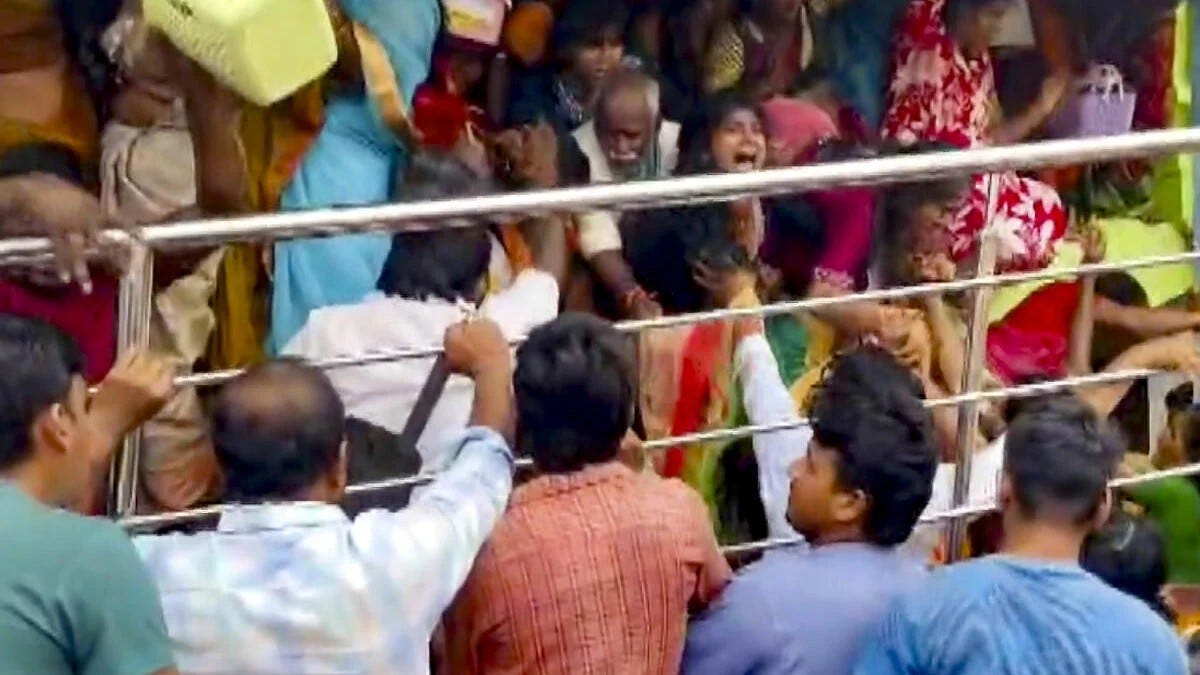
Tragedy at Sri Venkateswara Swamy temple; Kasibugga, Srikakulam district.
Cause; rush after iron railing damaged, victims fell from six-foot wall.
Culpable homicide case; registered against temple owner.
Another festival, another preventable tragedy. The script is so tragically familiar that you could write it yourself, which is precisely the problem.
The Deeper Take (Find the Pattern): This follows a grim, repeating script seen in countless religious gathering disasters in India. The pattern is consistent: overcrowding, inadequate infrastructure, and a small trigger leading to a catastrophic stampede, highlighting a systemic failure to apply modern crowd management principles. 🔗
💨 Delhi Bans Old Commercial Vehicles as Air Quality Worsens
CAQM ban; commercial vehicles registered before 2015 barred from entry.
Part of GRAP III measures; Delhi’s AQI nears 400 (’severe’ category).
Other measures; parking fees doubled to discourage private vehicle use. 🔗
🆔 UIDAI Eases Rules for Online Aadhaar Updates
Effective Nov 1; name, address, mobile number can be edited online.
No in-person visit needed; if mobile number is linked for OTP.
Revised fees; ₹75 for demographic updates, ₹125 for biometric. 🔗
📝 Trial Run for Digital, Self-Enumeration Census Begins
First phase trial; starts in select areas from Nov 1.
First digital Census; also first to enumerate caste in independent India.
Enumerators; to help prominent citizens fill details on a website. 🔗
3. The World Stage: Global Affairs
🏔️ Activist Sonam Wangchuk on TIME Climate List While Jailed

Ladakhi innovator; named to TIME100 Climate list in “Defenders” category.
Currently imprisoned; under National Security Act (NSA) in Jodhpur jail.
Detention follows protest; demanding statehood and constitutional safeguards for Ladakh.
Being named one of the world’s most influential climate leaders by TIME while your own government has you locked up under an anti-terror law is a level of irony so profound it’s almost performance art.
The Chessboard (The Meta-Narrative): This illustrates a clash between two value systems. The first, represented by TIME, values transnational climate action and individual heroism. The second, the Indian state’s, values national security and territorial integrity above all, especially in sensitive border regions. 🔗
💧 Report Details ‘Acute Risk’ to Pakistan After IWT Suspension
Ecological Threat Report 2025; highlights Pakistan’s water vulnerability.
India’s suspension of Indus Waters Treaty; gives it control over river flows.
Pakistan’s agriculture; 80% dependent on Indus basin, has only 30 days of water storage. 🔗
Protests Erupt in Tanzania Over Disputed Election
Widespread protests; follow allegations of irregularities in national elections.
Clashes reported; between demonstrators and police in Dar es Salaam.
Security forces deployed; as tensions intensify. 🔗
4. A Dose of Optimism
🎾 Tennis Legend Rohan Bopanna Announces Retirement
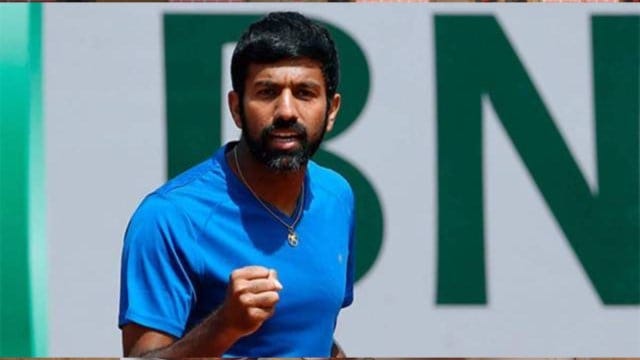
Two-time Grand Slam champion; hangs up his racquet after 20-year career.
Age 45; became oldest men’s doubles Grand Slam winner in 2024.
Achieved world number one doubles ranking; in 2024. 🔗
🚀 ISRO Begins Countdown for Heaviest Military Satellite
Countdown starts; for CMS-03 communication satellite.
Weight; 4,410 kg, heaviest to be launched from Indian soil.
Launch vehicle; LVM3-M5 rocket, nicknamed ‘Bahubali’. 🔗
5. Deep Dive
Deep Dive
The Quiet Ticking of India’s Household Debt Bomb
On the surface, India’s economy looks resilient. But beneath the headline GDP numbers, a silent and dangerous structural shift is underway. For the first time, Indian households are accumulating debt at a rate that dramatically outpaces their creation of financial assets. Between 2019 and 2025, annual household liabilities surged by 102%, while asset growth lagged at just 48%. This isn’t just a statistical curiosity; it’s a flashing red light on the dashboard of the national economy.
The problem isn’t borrowing itself, but its purpose. Traditionally, household debt was for creating assets—a home loan, a business loan. Now, over half of this borrowing is for non-housing retail loans: credit cards, personal loans, and gold loans. People are borrowing not to build future wealth, but to fund current consumption. The surge in gold loans, which have more than doubled since mid-2023, is particularly telling. It signals that households are liquidating their last-resort savings to pay for everyday expenses or to service other, more expensive debts.
This credit-fuelled consumption provides a short-term sugar rush to the economy. But it’s unsustainable. As net financial savings plummet, the domestic capital pool that funds both government and corporate borrowing shrinks, making credit more expensive for everyone. More critically, it leaves millions of households financially brittle. When the next economic shock arrives—a global recession, a domestic crisis—these over-leveraged households will have no buffer. Widespread defaults will follow, crippling the banking sector and triggering a vicious cycle of credit contraction and economic slowdown. We are trading long-term stability for short-term lifestyle aspirations, and the bill will eventually come due.
Sonam Wangchuk is celebrated as a climate hero by the world but detained as a national security threat by his own country. When a nation’s security interests and global humanitarian values collide, which should take precedence? Reply to this email with your thoughts.
Reply with your thoughts.
Stay sharp,
Aditya S.
Editor, The India Brief