
Supreme Court Unleashes CBI
☕ India’s Morning Briefing: Tue, December 02


Hello, and welcome to the brief.
Good morning, friends.
Welcome to the deep-dive edition of OneRead.News. If yesterday, December 1, 2025, felt like a day of cognitive dissonance, you were paying attention. We are witnessing a nation operating at two distinct speeds. On one hand, the Indian economy is flexing its macroeconomic muscles with a stunning 8.2% GDP print—a figure that defies the global slowdown. On the other, the financial vascular system showed signs of stress: the Rupee collapsed to a historic low of 89.73 against the dollar, and industrial output (IIP) barely crawled at 0.4%, reminding us that while services soar, factories are flickering.
Buckle up. It’s time to read the world.
Welcome to the 172nd edition of The India Brief
Do not miss the deep dive in the end
1. ⚖️ Politics, Law & Governance
🚨 Supreme Court Unleashes CBI on “Digital Arrest” Scams
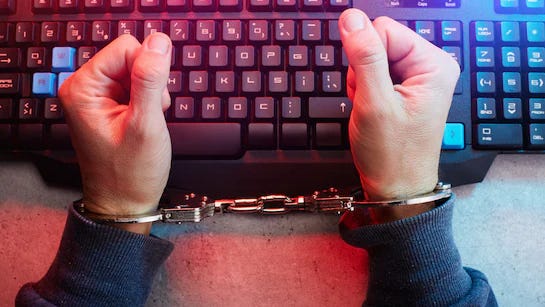
The Decree; In an extraordinary intervention, the Supreme Court has directed the CBI to conduct a pan-India investigation into “Digital Arrest” scams, explicitly bypassing the requirement for state consent.
The Scope; The probe targets the entire ecosystem: the scammers, the “mule accounts” in banks, and even the RBI’s failure to deploy AI/ML for fraud detection.
The Trigger; A realization by the Bench that over ₹3,000 crore has been siphoned off, primarily from senior citizens, by cross-border syndicates operating with impunity.
The Mandate; States like West Bengal and Tamil Nadu, which usually ‘allegedly’ block CBI entry, have been ordered to facilitate the agency; the CBI is also directed to coordinate with Interpol.
It seems the Supreme Court finally decided that “federalism” shouldn’t be a get-out-of-jail-free card for cybercriminals. For years, scammers in Jamtara or Nuh have relied on the fact that the Chennai Police have no jurisdiction in Haryana. The Court just bulldozed that barrier. It’s essentially saying, “If the crime is borderless, the police cannot be bordered.” Also, the RBI getting pulled up for its sleepy algorithms? Chef’s kiss.
🛡️ The Signal: This is a constitutional pivot disguised as a crime-fighting measure. By invoking its extraordinary powers to hand a specific category of crime—”Digital Arrests”—to the central agency (CBI) over the heads of state police forces, the Supreme Court is acknowledging a systemic failure in India’s policing architecture. The implications for the banking sector are seismic: if the CBI begins arresting bank managers for facilitating “mule accounts,” the KYC regime will transition from a bureaucratic checkbox to a forensic investigation.
👮 Terror & Security: The Red Fort Shadow
The Arrest; A Delhi court sent Jawad Ahmed Siddiqui, founder of Al Falah University, to 14-day judicial custody in a terror-linked money laundering case connected to “Red Fort blast” plot.
The Threat; Security agencies are on high alert following intelligence of “white-collar” terror financing networks utilising educational trusts.
🌫️ Delhi Pollution: A Breath of Fresh(er) Air
The Stat; Delhi recorded its best average Air Quality Index (AQI) for the Jan-Nov period in 8 years (excluding 2020), standing at 187.
The Court; The Supreme Court refused to treat pollution as a “seasonal” issue, ordering bi-monthly hearings and questioning why clear skies existed during COVID despite stubble burning.
Delhiites are currently experiencing that rare emotion known as “optimism,” or perhaps it’s just oxygen deprivation. The data says the air is better, but anyone looking out the window might still see a grey filter. The Supreme Court has stopped buying the “it’s the farmers” excuse, telling the government, “We saw blue skies during lockdown when farmers were still burning stubble. Explain that.”
🔬 The Lens: The Supreme Court’s intervention is a pivotal moment. By explicitly questioning the “stubble burning” narrative using the COVID lockdown as a control group, the Court is forcing a policy shift back onto vehicular emissions. This effectively kills the “blame the farmer” strategy. We are moving towards a year-round pollution mitigation strategy, hopefully.
2. 📈 Economy, Business & Defense
🏭 IIP Shock: The October Slump
The Number; Industrial output growth collapsed to a 13-month low of 0.4% in October, down from 4.0% in September.
The Cause; Officials blame “fewer working days” due to the festival season (Diwali/Dussehra) and a massive 6.9% drop in electricity demand due to extended rains.
The Contraction; Mining contracted by 1.8%, while manufacturing barely grew at 1.8%.
October was the “Month of Festivals,” and apparently, the “Month of No Production.” When the entire country goes on holiday for Diwali, factories don’t hum. But a drop to 0.4% is more than just holidays; it’s a warning light.
📉 The Signal: The divergence between GDP (Value Added) and IIP (Volume) is key. GDP measures value (boosted by profits), while IIP measures physical stuff made. The fact that corporate profits are up but physical output is flat suggests companies are making money by raising prices or cutting costs, not by selling more units. This “profit-led growth” is fragile.
🚁 Defense: The ₹8,000 Crore “Romeo” Deal
The Deal; India signed a ₹7,995 crore pact with the US for the “sustainment” (maintenance and spares) of the Indian Navy’s MH-60R “Romeo” helicopters.
The Tech; These are advanced anti-submarine warfare (ASW) choppers, critical for countering Chinese submarines in the Indian Ocean.
The Strategy; It boosts “operational availability” and integrates Indian MSMEs into the global supply chain for repairs.
India loves buying shiny new weapons, but often forgets to buy the batteries. This deal is unsexy but vital. It ensures that our submarine hunters are actually hunting, not gathering dust. It also proves that “Atmanirbhar Bharat” has a silent partner: the US Military-Industrial Complex.
⚓ The Deeper Take: By signing a long-term “sustainment” pact, India is deeply interlocking its naval logistics with the US. This is “interoperability” by another name. In a conflict scenario, having a logistics chain compatible with the US Navy is a force multiplier. It reflects a maturation in procurement—moving from “buying hardware” to “buying capability.”
📉 Markets: The Bull Run Continues (Mostly)
The Indices; The Sensex hit a record high of 86,159 in early trade before cooling off to close flat; Nifty touched 26,325.
The Flow; Domestic Institutional Investors (DIIs) continue to buy heavily, absorbing the massive sell-off by Foreign Institutional Investors (FIIs).
The Sectoral Story; Auto and Pharma stocks rallied, while Oil & Gas dragged the indices down.
The Indian stock market has developed an iron stomach. Foreigners are fleeing like they saw a ghost, but the Indian middle class—armed with SIPs—is saying, “More please.” We are essentially funding our own bull run. It’s “Financial Atmanirbharta,” but it carries the risk of a domestic bubble.
📊 The Lens: The market behavior confirms the “financialization of Indian savings.” Historically, when FIIs sold, Indian markets crashed. Now, SIP inflows act as a shock absorber. However, the rotation into “defensives” (Pharma) suggests smart money expects a slowdown. The market is pricing in perfection (GDP) while ignoring the cracks (IIP).
🦄 Startup Ecosystem: Funding & Pivots
The Win; Fintech startup Finfactor raised $15 million in Series A funding led by WestBridge Capital.
The Trend; ESOP buybacks generated $158 million for startup employees in 2025, though this volume is down 7% from the previous year.
The Slump; Ola Electric sales hit a three-year low, capturing just 7.2% market share as legacy giant TVS Motors retakes the lead.
The Ola Electric saga is the “Tortoise and the Hare” retold for the EV age. Bhavish Aggarwal moved fast and broke things—specifically, his service network. TVS moved slow, built a reliable product, and now wears the crown. It’s a lesson that in India, “customer service” isn’t a cost center; it’s a survival strategy.
🚀 The Signal: The drop in ESOP buybacks suggests unicorns are hoarding cash to prepare for a volatile 2026. Ola’s collapse validates the “Legacy Auto” strategy—enter late but enter right.
🌊 Cyclone Ditwah: Diplomacy in the Rain
The Impact; Cyclone Ditwah weakened into a depression but dumped heavy rains on Chennai and Andhra Pradesh.
The Rescue; India successfully evacuated the last batch of stranded nationals from Sri Lanka, intensifying relief efforts for the island nation.
The Context; While Chennai wades through water, New Delhi is acting as the “First Responder” for Sri Lanka.
Nature doesn’t recognize borders, and neither does Indian diplomacy when disaster strikes. While Chennai struggles with urban drainage (again), New Delhi is busy being the “Net Security Provider” for the region. Beijing sends loans; New Delhi sends life rafts.
3. 🧬 Society, Misc & Specifics
✈️ Aviation: Air India’s China Move
The Strategy; Air India appointed a General Sales Agent (GSA) in China, signaling a resumption of direct flights to Shanghai/Beijing in 2026.
🏸 Badminton: The Sisters Defend
The Win; Treesa Jolly and Gayatri Gopichand defended their Syed Modi International women’s doubles title.
The Loss; Veteran Kidambi Srikanth fell short in the final, continuing his title drought.
🎥 Entertainment: The “Tere Ishk Mein” Box Office
The Hit; Dhanush and Kriti Sanon’s film Tere Ishk Mein crossed the ₹33 crore mark on Day 2.
The Vibe; A strong showing for a romantic drama in a market dominated by action tentpoles.
🏥 Health: AI Surveillance
The Plan; India is integrating AI and real-time analytics for a new disease surveillance system to predict pandemics.
The Driver; Post-COVID, the need for a “pandemic radar” is driving this tech adoption.
🏫 Education: The HECI Bill
The Bill; The Higher Education Commission of India (HECI) Bill, 2025 is listed to replace UGC and AICTE with a single regulator.
The Reform; This is the biggest regulatory shake-up in Indian education in decades, aiming to streamline accreditation.
4. World Watch: Top 10 Global
🇺🇸 The Trump Warning: “Don’t Touch Syria”
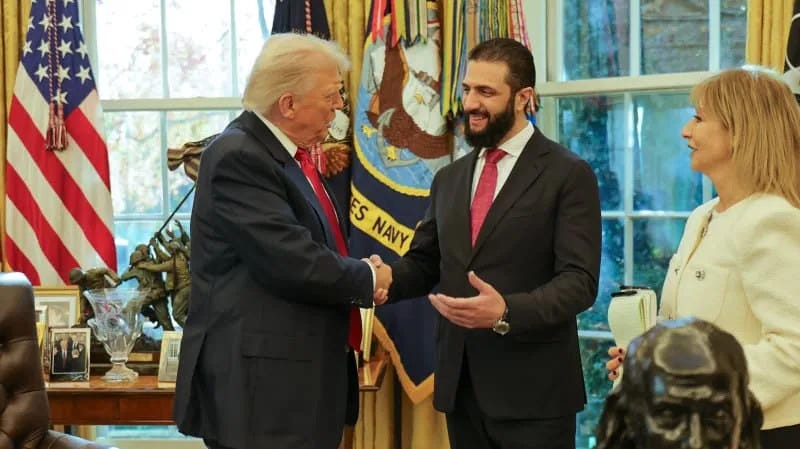
The Warning; President Trump warned Israel not to “interfere” in Syria’s evolution, demanding a “strong and true dialogue”.
The Context; This comes days after Israeli forces killed 13 people in southern Syria; Trump is backing the new Syrian leadership under Ahmed al-Sharaa.
The Shift; Trump invited Netanyahu to the White House but is clearly drawing a red line on Syrian stability.
Trump is playing the “Peace through Strength” card, but this time the strength is directed at an ally. By protecting the new Syrian regime, Trump is trying to stabilize the region to facilitate a broader US withdrawal.
🇷🇺 The Russia-Ukraine Endgame?
The Meeting; Putin is set to meet US Special Envoy Steve Witkoff in Moscow today.
The Plan; The Trump Administration’s proposal reportedly involves Ukraine ceding territory (”Land for Peace”) and capping its army size.
The Fear; EU leaders like Kaja Kallas fear the pressure is entirely on the “victim” (Ukraine) to capitulate.
💊 US-UK Pharma Deal: Zero Tariffs
The Deal; The US and UK agreed to zero tariffs on medicines; in exchange, the UK NHS commits to spending 25% more on innovative drugs.
The Cost; This could cost the NHS £3bn but aims to end the “freeloading” on US R&D that Americans have long complained about.
🇱🇧 Pope Leo XIV: The Peace Mission
The Visit; Pope Leo XIV visited Lebanon, calling for peace at the tomb of a saint revered by both Christians and Muslims.
The Tension; Hezbollah urged the Pope to condemn Israeli “aggression” after the assassination of their military chief.
🇨🇳 China: The Green Giant Stumbles
The Slowdown; China’s factory activity contracted for the 8th consecutive month in November.
The Pivot; Beijing is aggressively pushing “Green Tech” exports to compensate, fueling trade tensions with the West.
5. The Good Stuff: Humanity Wins
🐦 Hornbill Heroes; The Nyishi tribe in Arunachal Pradesh, once hunters, have adopted 238 Hornbill nests, transforming from predators to protectors. 🔗
🥘 Food for Soul; The Saras Aajeevika Food Festival launched in New Delhi, showcasing the culinary heritage of rural women self-help groups. 🔗
6. The Deep Dive: The Pan-India Panopticon
Headline: 🔍 Deep Dive: Why the Supreme Court Just Federalized the Cyber War

The Phenomenon: Imagine receiving a video call. The caller wears a police uniform. They quote your Aadhaar number and claim a parcel addressed to you contains drugs. They don’t ask you to visit the station. Instead, they “arrest” you digitally—demanding you stay on the video call for hours until you transfer your life savings to a “verification account.” This is the “Digital Arrest” scam. In 2025 alone, it has drained ₹3,000 crore from Indians.
The Mechanism of Failure: The scam thrives on India’s federal structure. Law and order is a state subject. If a victim in Chennai is scammed by a criminal in Jamtara using a “mule account” in Mumbai, the Chennai police face a jurisdictional nightmare. By the time the paperwork moves, the money has been “layered” through ten different accounts. The scammers weaponized India’s bureaucracy against its citizens.
The Supreme Court’s “Nuclear Option”: Yesterday, the Supreme Court smashed this barrier. By ordering the CBI to conduct a pan-India investigation into Digital Arrest cases, the Court effectively declared that cybercrime has no borders, and therefore, neither should the police. Crucially, the Court waived the requirement for state consent. States like West Bengal often withhold this permission, but the Court has prioritized national security over federal niceties.
The Accountability Shift: For the first time, the Court also turned its gaze to the enablers: the Banks and the RBI. The Justices asked: “Why didn’t the AI see this?” If an account that usually holds ₹500 suddenly sees transactions of ₹50 lakhs, the bank’s algorithm must freeze it. The Court has now impleaded the RBI, demanding an explanation for this technological failure.
The Future: This is the birth of a Federal Cyber Agency in practice, if not in name. Expect a massive crackdown on “Mule Accounts” in 2026. The “Digital Arrest” scam didn’t just steal money; it stole the public’s trust in Digital India. The Supreme Court just launched a rescue mission for that trust.
7. Sign-Off
Question of the Day: If the GDP is growing at 8.2% but the Rupee is at an all-time low of 89.73, are we getting richer or poorer? (Hint: It depends on whether you sell code or buy iPhones).
Stay curious, stay safe, and for the love of God, do not pick up video calls from “Police Officers” on WhatsApp.
- Aditya S. Editor-in-Chief, OneRead.News